

The Short Answer
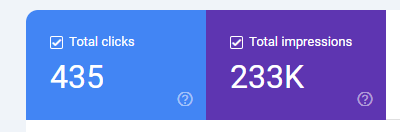
I took a new online wig store from zero to 233K+ Google impressions with semantic SEO. I used keyword clusters, more than 1,000 connected pages, and 15 to 30 internal links on every page. I built very few backlinks.
The turning point was internal linking. My pages were not getting indexed until I changed how they linked to each other.
This ecommerce SEO case study shows every step, the real Search Console numbers, and what those numbers mean.
The Store and the Starting Point
The store sells human hair wigs and hair extensions to customers in the United States.
It was a brand new site with no traffic and no rankings. I started publishing content in late September 2024.
Why I Moved From Google Ads to SEO
I started with Google Ads because I wanted fast results. The ads brought clicks, but the cost per click was too high for the return.
Ads also stop the day you stop paying. I wanted traffic that keeps growing, so I moved my effort into SEO.
What Semantic SEO Means in This Case Study
Semantic SEO means covering a whole topic, not one keyword. Google tries to understand meaning and how ideas connect.
For this store, I did not write one page about “glueless wigs” and stop. I also covered who needs them, how to wear them, how to care for them, and how they compare to other wigs. Then I linked those pages together.
Step 1: Keyword Research With Seed Keywords
I began with six seed keywords that buyers already use:
- human hair wigs
- glueless wigs
- lace front wigs
- blonde wig
- virgin hair
- remy hair
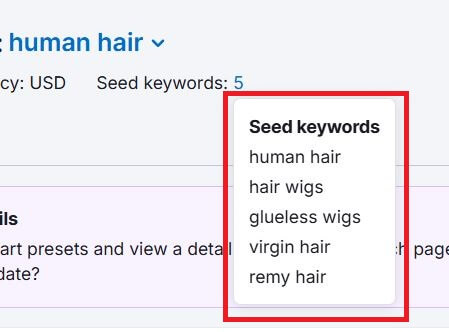
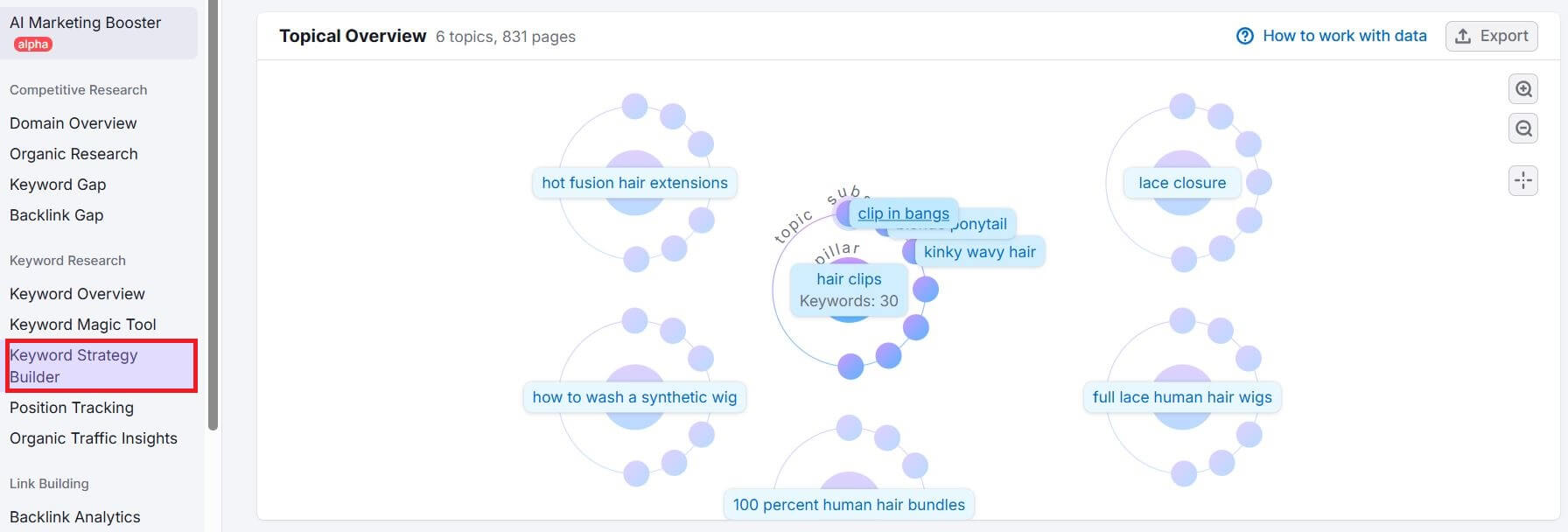
I put these into the Semrush Keyword Strategy Builder. It grouped related searches into clusters and showed me long-tail phrases, such as:
- blonde wigs with dark roots
- short lace front wigs for summer
- how to style a virgin hair wig
- best glueless wigs for alopecia
I removed competitor brand names from the list. Those searches would not convert for this store.
Step 2: Matching Keywords to Page Types
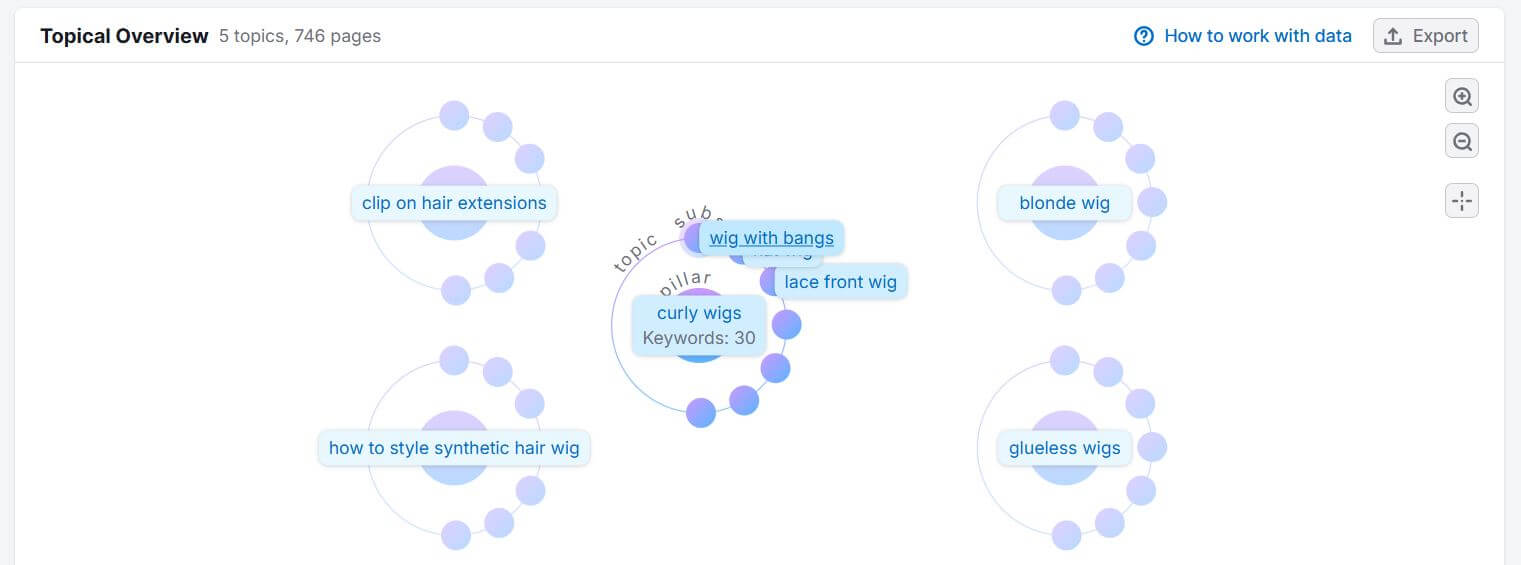
Next, I gave every keyword a home. I used three page types:
| Page type | Job | Example |
|---|---|---|
| Pillar page | Covers the main topic | Human hair wigs |
| Subpage | Covers one product group | Glueless wigs, lace front wigs |
| Blog post or tag page | Answers one question | How to style lace wigs, wig care tips |
Each keyword went to one page only. This stopped pages from competing with each other.
Step 3: Building 1,000+ Pages
I published 200 blog posts and 800 tag pages.
Each tag page had 800 to 1,000 words of its own content. A tag page included:
- An introduction of 100 to 150 words
- A product overview
- Answers to common customer questions
- Links to related products
- Links to related blog posts

I used the free version of ChatGPT to write first drafts. Then I edited every page by hand before publishing. I checked facts, fixed the tone, and added the links. I explain that process in my guide to SEO content writing.
Google’s guidance on creating helpful content says content must be written for people. That is why I did not publish raw drafts. I have seen what happens when a site does. I cover it in my manual SEO vs AI SEO experiment.
Step 4: The Internal Linking Mistake and the Fix
This is the part that changed the results.
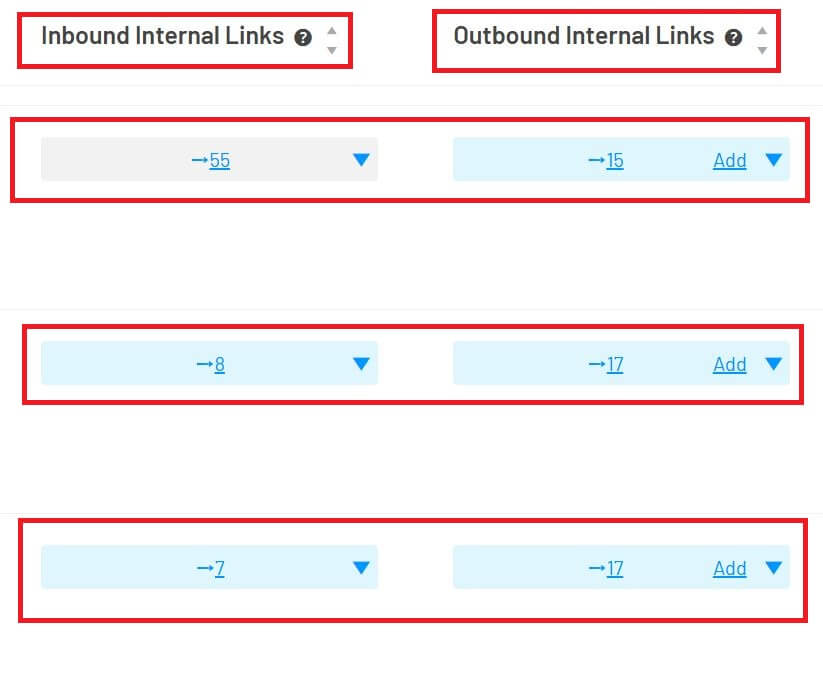
What I did first: I linked pages in a line. Page 1 linked to page 2, and page 2 linked to page 3. It did not work. Google was not indexing the new pages.
What I changed:
- I added 15 to 30 internal links to every page.
- Blog posts linked to tag pages, and tag pages linked back.
- Every subpage linked up to its pillar page.
- Each link used anchor text that described the page it pointed to.
What happened: Within weeks, pages started to appear in Google’s index. Impressions and clicks began to climb.
Step 5: On-Page Setup for Every Page
Every page followed the same rules:
- One H1, with clear H2 and H3 headings
- Short paragraphs and bullet points
- A question and answer section
- Descriptive image file names and alt text
The question and answer sections gave short, direct answers. Here are two examples from the store:
How long do real human hair wigs last? With proper care, real human hair wigs can last 1 to 2 years, depending on use and care.
Are human hair extensions better than synthetic ones? Human hair looks natural, can be styled with heat, and lasts longer than synthetic hair.
I use the same rules on every project. They are in my SEO checklist.
The Results
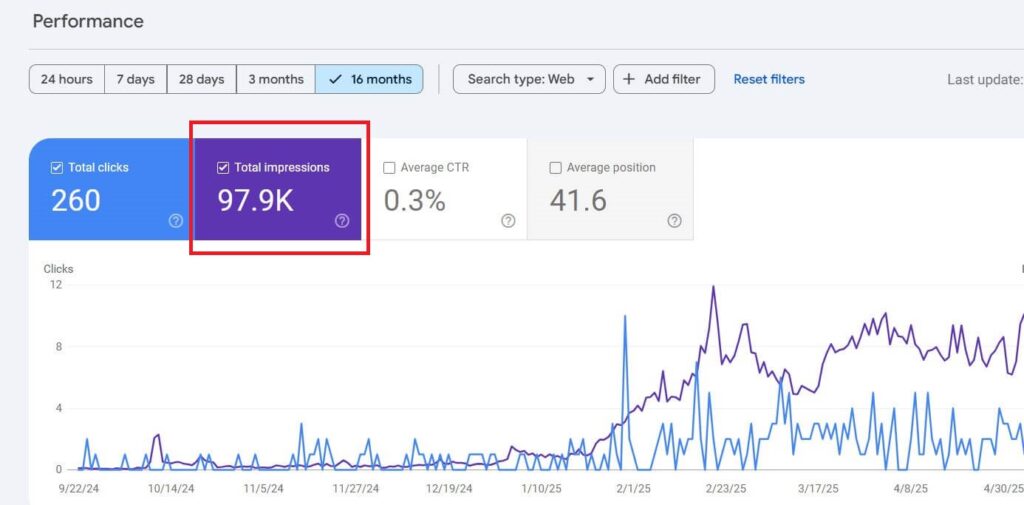
All numbers come from Google Search Console. They are running totals from late September 2024.
97.9K Search Console screenshot
106K Search Console screenshot

233K Search Console screenshot
The chart shows the pattern clearly. Impressions stayed low for the first few months. They rose sharply after the internal linking change took effect.
I built very few backlinks during this time. There was no outreach campaign, no paid PR, and almost no guest posting.
What These Numbers Mean
This project proved two things. A brand new store can get 1,000+ pages indexed with strong internal linking, and topic clusters can earn six-figure impressions with very few backlinks.
It was also an early-stage result. Impressions show visibility, not sales, and at the 106K mark, most pages were still ranking beyond page one. The next step for a store like this is to strengthen the best-performing pages and build quality backlinks to move them up.
What I Learned
- Fix indexing first. Content cannot rank if Google does not index it. Internal links solved this.
- Give every keyword one page. Clear mapping stops pages from competing.
- Cover the topic, not the term. Clusters earned visibility together.
- Edit every draft. AI saved time on first drafts. The editing made the pages useful.
- Read past impressions. Check clicks and average position too.
Frequently Asked Questions
What is semantic SEO for ecommerce?
It means building groups of pages around a product topic. One main page covers the product. Supporting pages answer related questions. Internal links connect them so Google understands the full topic.
How do you do keyword research for an ecommerce site?
Start with seed keywords that buyers use. Expand them with a keyword tool. Group them into clusters. Give each keyword one page. Then link the pages together and track the results.
How many internal links should a page have?
In this project, 15 to 30 internal links per page worked. Linking pages in a simple line did not. Every link should point to a related page.
Can an online store rank without backlinks?
A new store can get indexed and earn impressions with strong structure and content. This case study shows that. Reaching page one for competitive keywords usually still needs backlinks.
Final Thoughts
This store started with paid ads and no organic traffic. Keyword clusters, clear page mapping, and strong internal linking took it to 233K+ impressions.
If your store’s pages are not getting indexed, start with your internal links. That one change did more for this project than anything else.
Want to see how this approach worked in other industries? Read my other SEO case studies.

SEO Consultant with 11+ Years of Experience across E-commerce, Legal, Medical, and Local Service Businesses. Learn more about me, read my Case Studies, or Work With Me.