Last updated: October 2026
The Short Answer
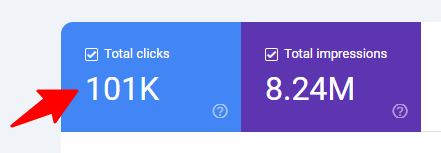
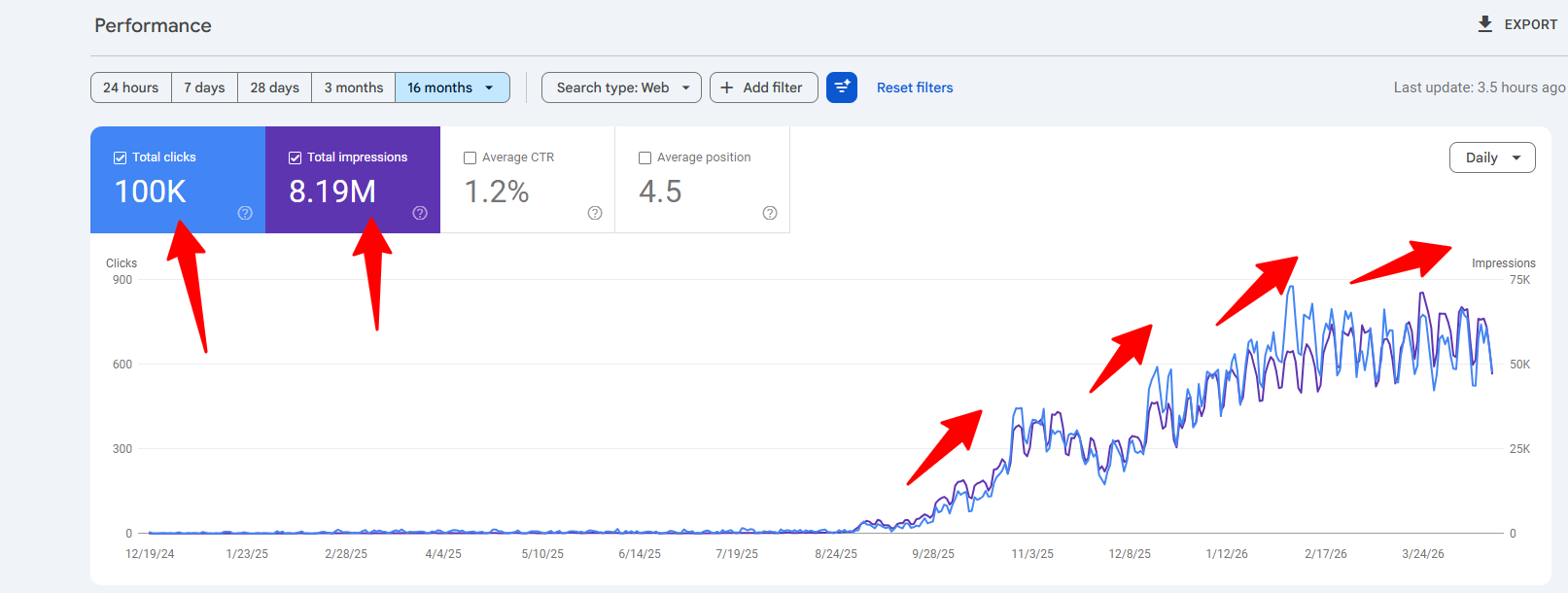
On one service website, manual SEO grew organic traffic from 5 to 6 clicks a day to 600 to 700 clicks a day. The site reached 100K organic clicks in five to six months.
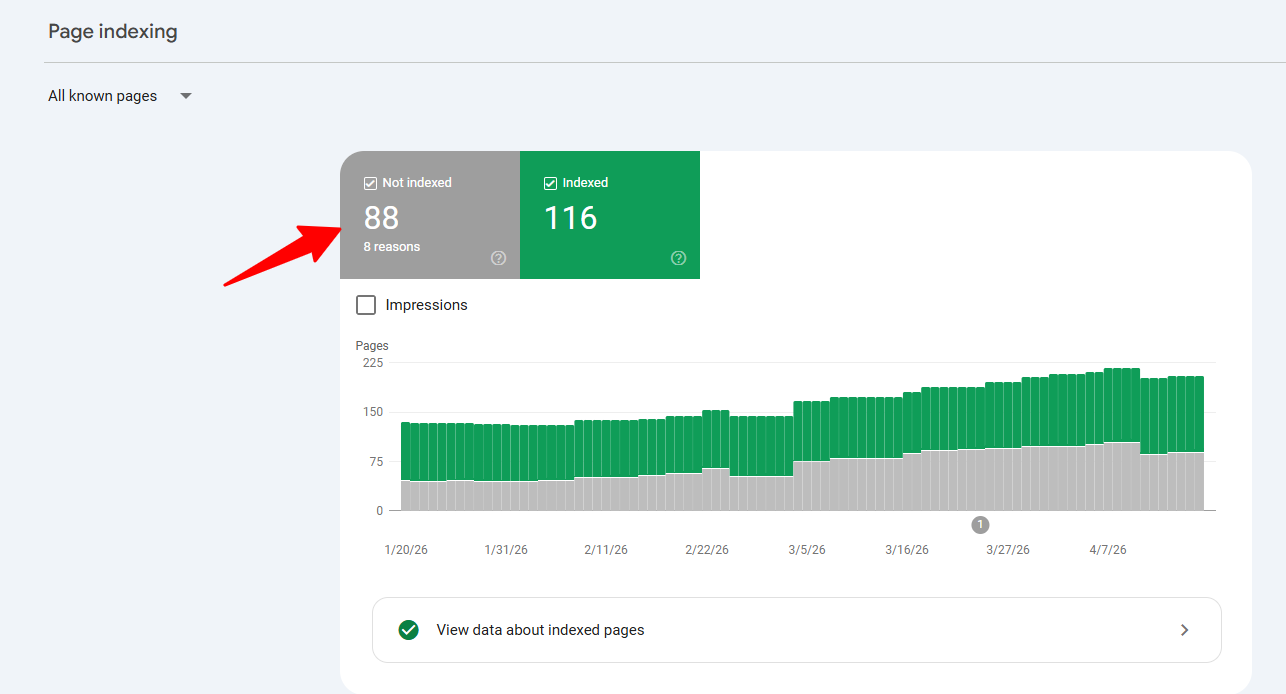
Later, the strategy changed to bulk AI-generated content and automated backlinks. Only about 10% of the new pages got indexed. The pages written by hand had indexed above 90%. The site’s Semrush Authority Score rose from 9 to 27, then fell to 20. Daily clicks fell from 600 to 800 in early 2026 to about 300 by September 2026.
This case study shows both periods with Search Console data. It is one site, so I also explain what the data can and cannot prove.
Background: The Website and the Timeline
The site is a local service business in the United States. When I started, it was getting 5 to 6 organic clicks a day.
There were two periods:
- Manual SEO. I planned and wrote the content and built the internal links. From August 2025 to January 2026.
- AI and automation. The strategy was replaced with bulk AI-generated posts and automated backlinks. From February 2026, the client switched to an AI tool for content and backlinks. I did not run this phase.
Phase 1: What I Did With Manual SEO
- Keyword research by intent. I chose keywords based on what the searcher wanted to do.
- Topic clusters. Related pages were grouped and linked together.
- Clean URLs. Short, readable, and based on the main keyword.
- Content written from experience. Each page answered one specific question.
- Internal linking. Blog posts linked to service pages and to each other.
- A balance of service and informational pages.
Results of Phase 1
- 600 to 700 clicks a day, up from 5 to 6
- 100K organic clicks within five to six months
- Strong rankings for service keywords
- More leads, because the content matched what searchers wanted
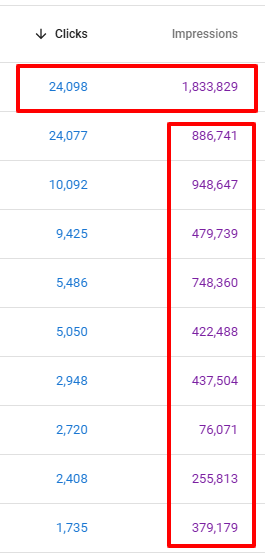
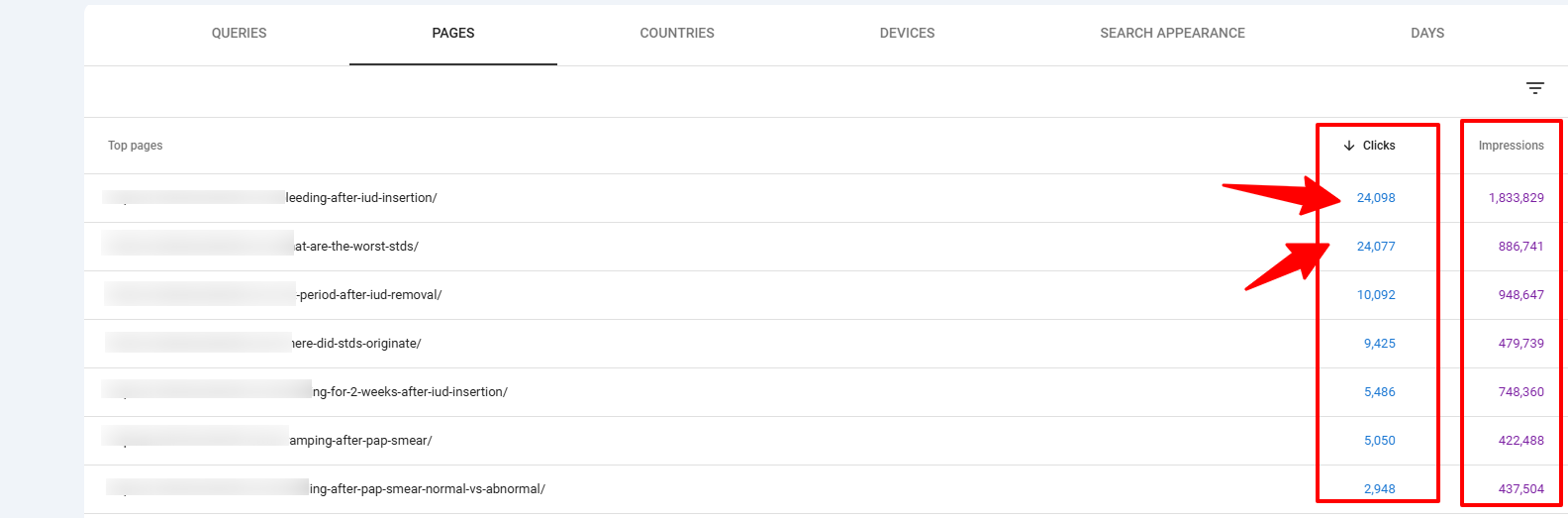
The top pages from this period each earned thousands of clicks:
| Page | Clicks |
|---|---|
| Page 1 | 24,098 |
| Page 2 | 24,077 |
| Page 3 | 10,092 |
| Page 4 | 9,425 |
| Page 5 | 5,486 |
One page reached close to 2 million impressions.
Phase 2: What Changed With AI Content
After the first period, the strategy moved to:
- AI-generated blog posts
- Automated publishing
- URLs created by a program
- Bulk backlink generation
What the New Pages Looked Like
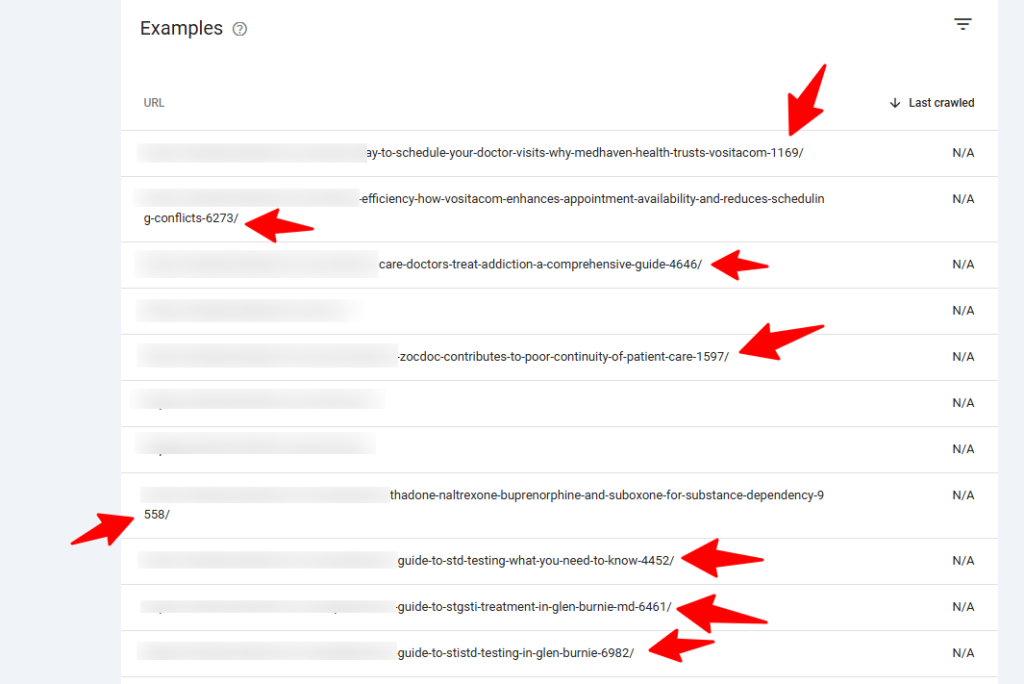
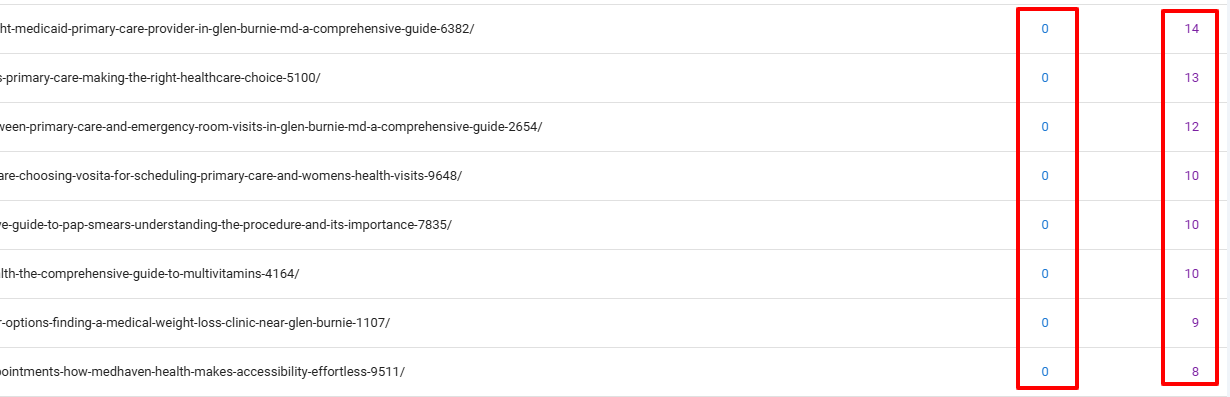
- Long URLs with random numbers at the end, such as -4925 and -5100
- Weak keyword targeting
- No internal links to or from other pages
The Indexing Gap
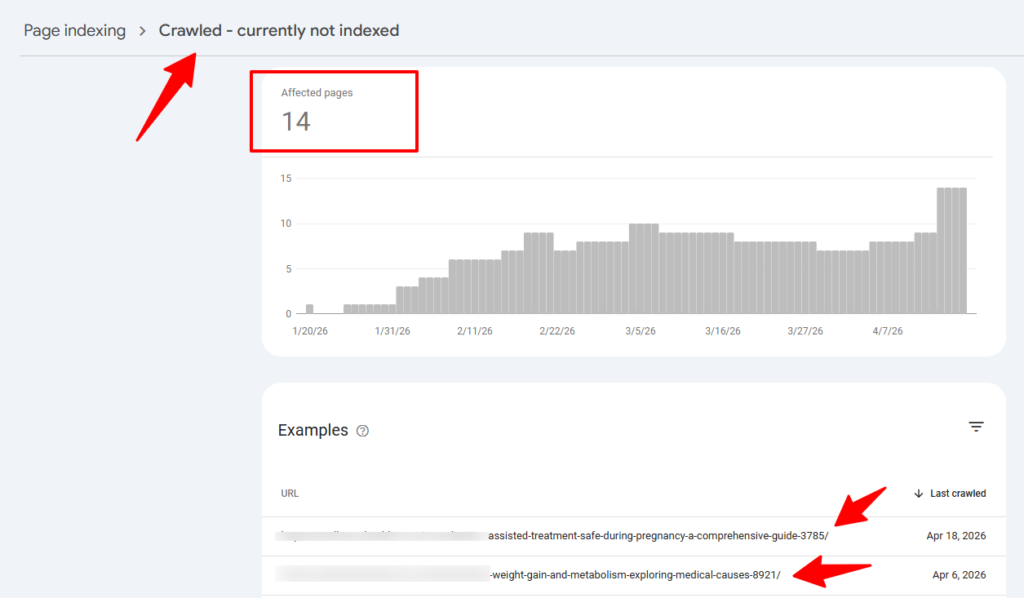
This was the clearest difference between the two periods.
| Manual SEO pages | Bulk AI pages | |
|---|---|---|
| Index rate | Above 90% | About 10% |
| Clicks per page | Thousands on the top pages | 0 to 2 |
| Internal links | Planned for every page | None |
| URLs | Short and readable | Long, with numeric endings |
The Effect on the Rest of the Site
Three things happened after the AI content was added.
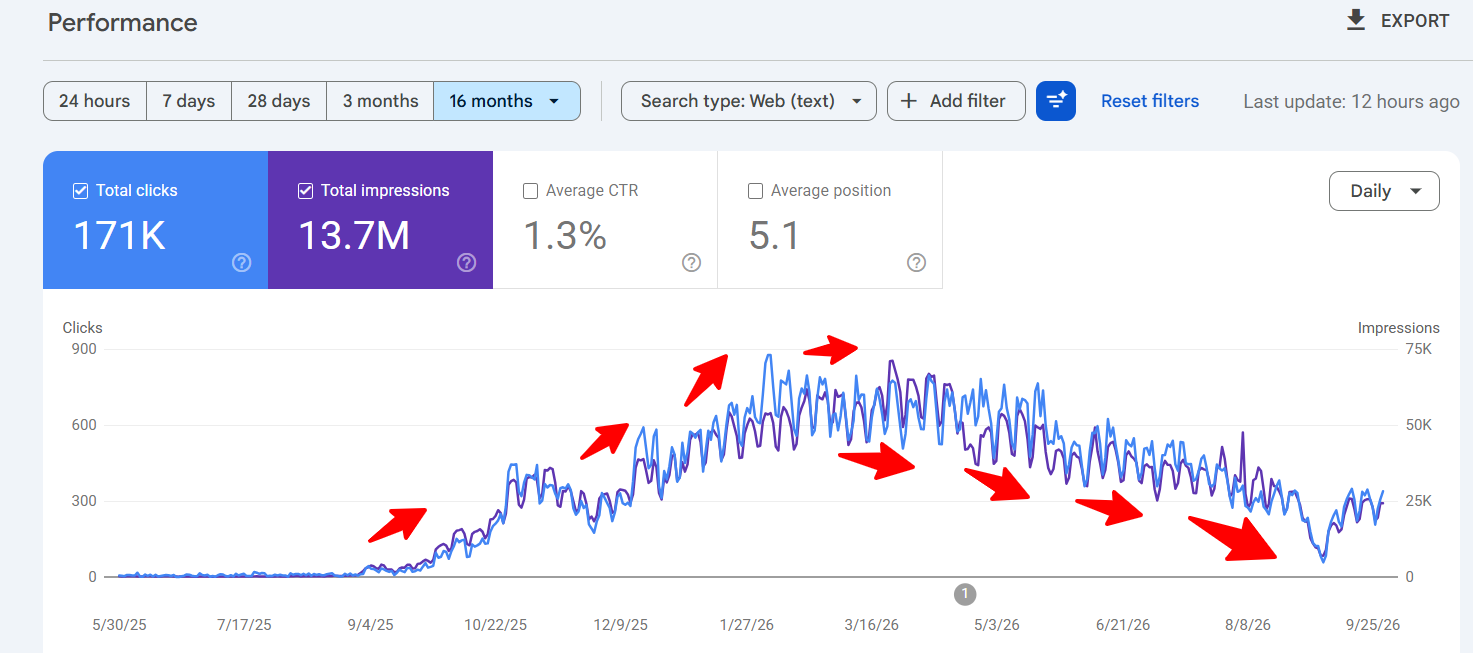
Daily clicks fell. Clicks were between 600 and 800 a day in early 2026. By September 2026, they were around 300 a day.
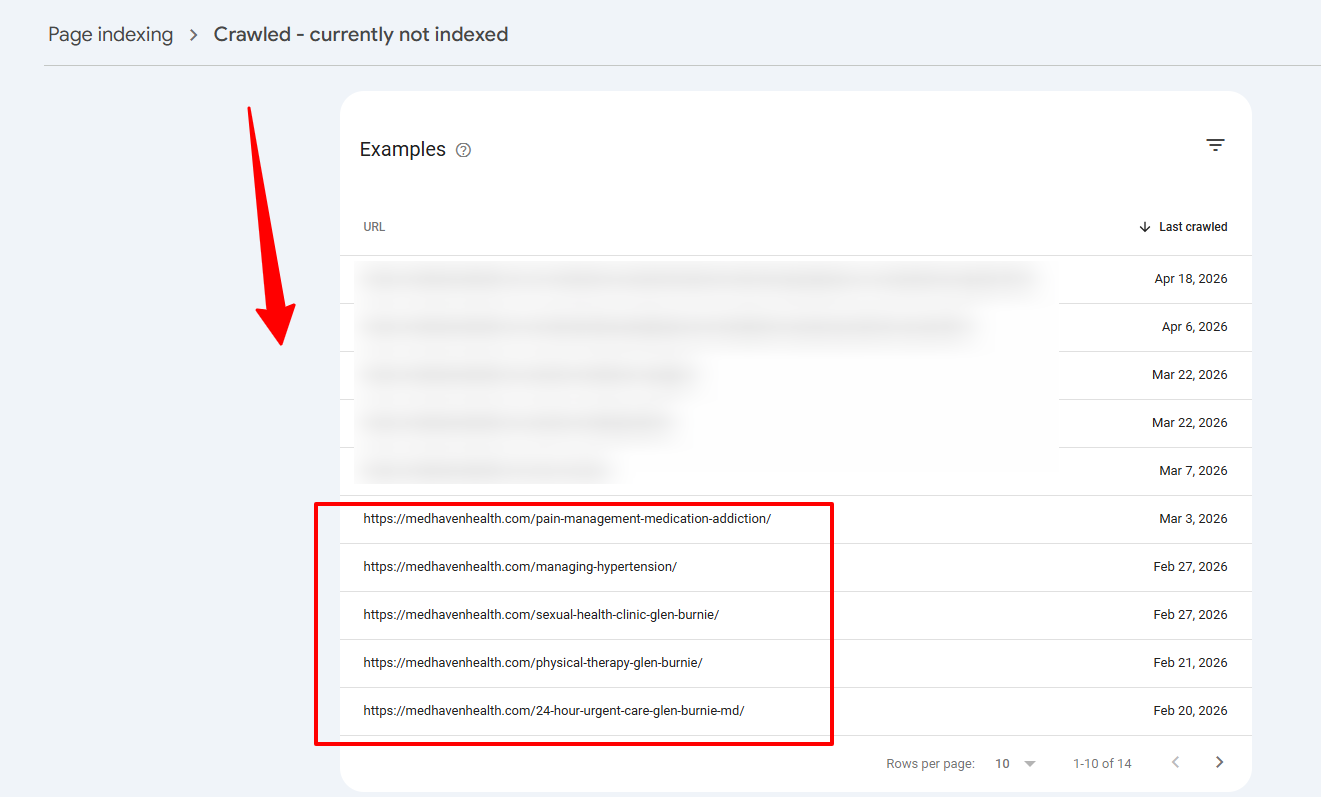
Some older pages lost index coverage. Pages that had performed well started dropping out of Google’s index over time.
The Authority Score fell. Semrush showed the score at 9 before my work, 27 after manual SEO, and 20 after the AI period.
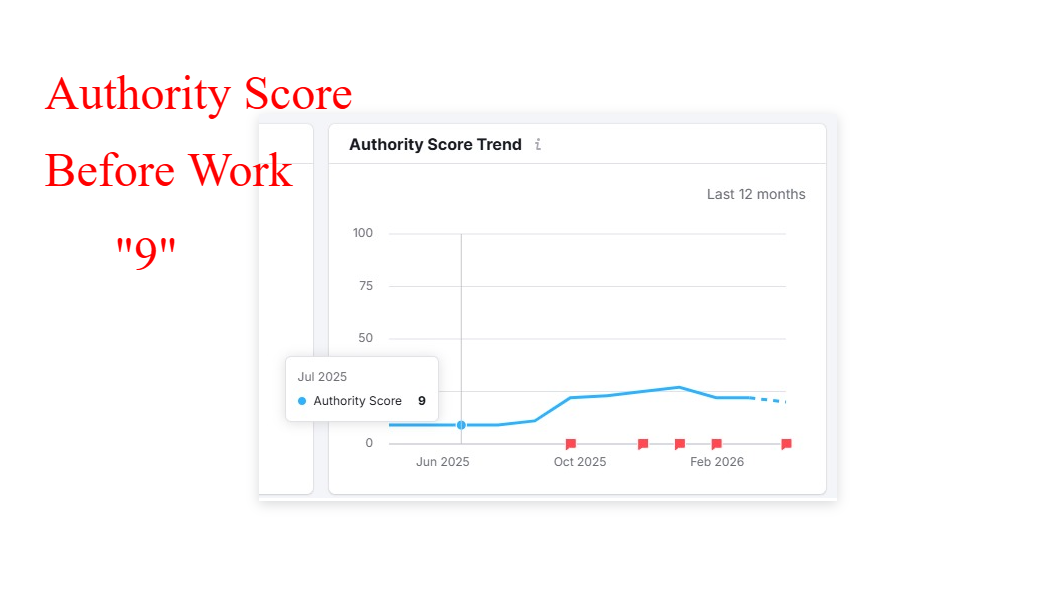
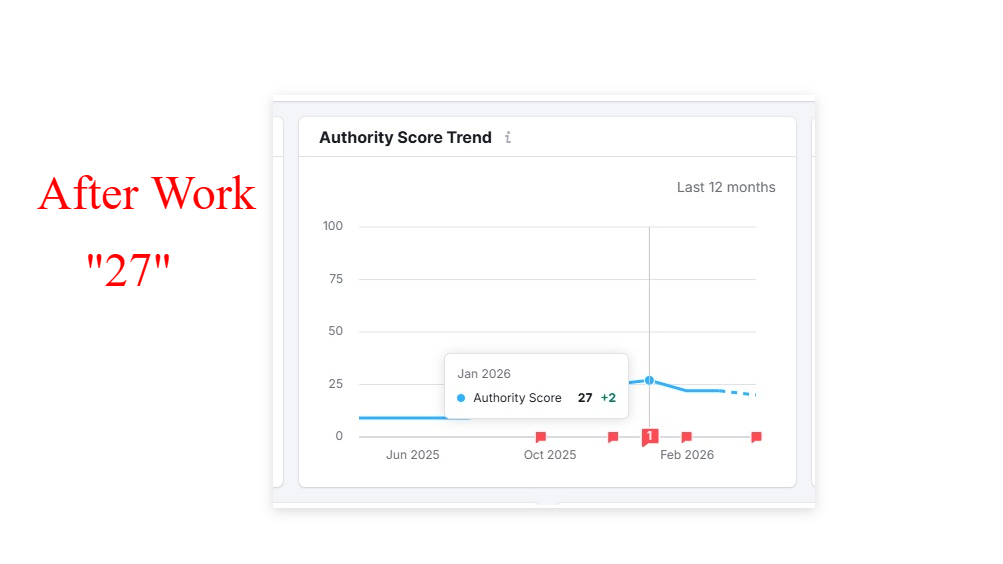
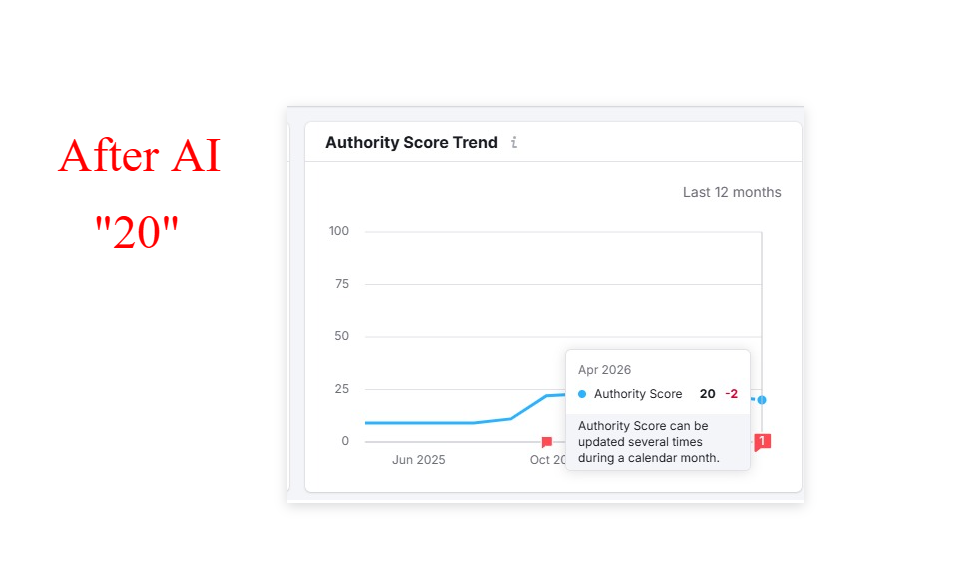
The pages from the manual period kept bringing traffic, but the new content added almost nothing, and total clicks fell by about half.
Before and After Comparison
| Factor | Before SEO | After manual SEO | After AI content |
|---|---|---|---|
| Semrush Authority Score | 9 | 27 | 20 |
| Organic clicks | 5 to 6 a day | 600 to 700 a day | About 300 a day by September 2026 |
| Index rate of new pages | Low | Above 90% | About 10% |
| Internal linking | Poor or missing | Planned | Missing on new pages |
| Backlinks | Few | Relevant, brand-led | Bulk, low quality |
Why the Manual Pages Did Better
From what I saw on this site, four things separated the two sets of pages:
- Each manual page answered a real question. The AI posts were published without checking what people searched for.
- Manual pages were linked into the site. The AI posts had no internal links, so Google had little reason to crawl them.
- Manual pages were edited. Someone checked every page before it went live.
- Manual backlinks were relevant. The automated links came from unrelated sites.
The messy URLs were a sign of automated publishing. I do not believe the URLs alone caused the indexing problem.
What This Case Study Does Not Prove
I want to be clear about the limits.
- This is one website. It is an observation of two periods, not a controlled test.
- The new pages were younger. New pages always have fewer clicks than old ones. That explains part of the click gap, though not the 10% index rate.
- Other things changed during the same months. Google updates and competitors also affect results.
- It does not prove AI content cannot rank. It shows what happened when AI content was published in bulk with no editing, no keyword plan, and no internal links.
What I Recommend
- Use AI for research, outlines, and first drafts.
- Edit every page before it goes live.
- Give each page one keyword and one purpose.
- Link every new page into the site.
- Publish fewer, better pages. Unindexed pages do nothing for you.
- Avoid automated backlink systems.
Frequently Asked Questions
Can AI-generated content rank on Google?
Yes, when a person edits it and it answers the search well. On this site, the AI content that failed was published in bulk with no editing and no internal links.
Why do AI-generated pages fail to get indexed?
In this case, the pages had weak keyword targeting, no internal links, and little that was new. Google indexed only about 10% of them.
Is manual SEO still worth it in 2026?
On this site, yes. The pages planned and written by hand brought almost all of the traffic.
What is the best way to use AI for SEO?
Use it to work faster, not to replace planning and editing. Let AI help with drafts, then check the facts, the structure, and the links yourself.
Final Thoughts
The lesson from this site is not that AI is bad for SEO. The lesson is that publishing without a plan does not work, whoever writes the content.
Manual SEO built 100K clicks in under six months. Bulk AI content added pages that Google mostly ignored.
See my other SEO case studies, or read my SEO content writing process for how I plan and edit each page.

SEO consultant with 11+ years of experience helping e-commerce, legal, medical, and local service businesses in the US, UK, and Canada get found on Google, Bing, and AI search engines like ChatGPT, Perplexity, and Claude. Every case study on this site uses his own Search Console data. Learn more about me, read my case studies, or work with me.