
Last updated: November 2026
What Is Off-Page SEO?
Off-page SEO, also called off-site SEO, is everything done outside your website that helps it rank: links from other sites, mentions of your brand, reviews, local listings and people searching for you by name. On-page SEO shows Google what your page is about. Off-page SEO shows Google that other people trust it.
I’m Frasat Ali, an SEO consultant. I have worked in SEO since 2015, mostly for local service businesses, clinics, law firms and online stores. This guide covers the off-page SEO strategy I use, the techniques that still work in 2026, a real example from a Toronto cleaning company, and what offline SEO means.
Off-Page SEO vs On-Page SEO
On-page SEO is the work you fully control on your own site. Off-page SEO is the trust you earn from the rest of the web. A site needs both: on-page work makes a page worth ranking, and off-page signals help Google believe it.
| On-page SEO | Off-page SEO | |
|---|---|---|
| Where it happens | On your website | Outside your website |
| Main tasks | Content, titles, headings, internal links, speed | Backlinks, brand mentions, reviews, local listings |
| Control | Full | Partial: you earn it, others decide |
| What it tells Google | What the page is about | Whether others trust it |
For the on-page side, see my SEO checklist.
What Actually Counts in Off-Page SEO
Backlinks, reviews and local listings are the off-page signals Google has confirmed. Brand mentions and branded searches matter too, though Google has not confirmed them as direct ranking factors for regular results. Two things often listed as ranking factors, social shares and Domain Authority, are not Google ranking factors at all.
The signals that matter
- Relevant backlinks. A link from a real site in your industry or city is a vote of trust. One relevant link is worth more than many unrelated ones.
- Brand mentions. Articles, lists and directories that name your business, even without a link. Google says these count toward local prominence. For regular organic rankings, Google has not confirmed they count, but they often lead to links.
- Reviews and local listings. For local businesses, Google says prominence in local results is based on information from across the web, including links, articles, directories and reviews.
- Branded searches. When people search for your business by name, it shows real-world demand. Google has not confirmed this as a direct ranking factor, but it is a strong sign your off-page work is building a known brand.
Two common myths
- Domain Authority is not a Google metric. It is a score from Moz that estimates how strong a site’s links are. It is useful for comparing sites, but Google does not use it.
- Social shares are not a direct ranking factor. They help people discover your content, which can lead to links, but a share itself does not raise rankings.
My Off-Page SEO Strategy, Step by Step
My off-page SEO strategy follows one rule: earn relevance first, then volume. These are the steps I follow on client projects, in this order.
- Fix the foundation. Make sure the business name, address and phone number are the same on every listing. For local businesses, complete the Google Business Profile first.
- Study competitors’ links. Use a tool such as Semrush or Ahrefs to see which sites link to the top-ranking competitors. Those sites already link to businesses like yours.
- Go after local and niche relevance. City guides, local news, industry blogs and “best of” articles in your area.
- Turn existing mentions into links. Find articles that already name your brand without linking, and ask for a link.
- Build reviews steadily. Ask every happy customer, and reply to every review.
- Keep anchor text natural. Use your brand name, your URL or plain phrases. Never repeat the same keyword anchor across many links.
Off-Page SEO Techniques That Work in 2026
The off-page SEO techniques that still work are the ones a real business would want even if Google did not exist: being featured, being talked about and being recommended. Each technique below says when it fits best.
1. Local Features and Citations
Getting listed in city guides, local “best of” articles and relevant directories. Best for local service businesses, where nearby customers search with a city name.
2. Relevant Guest Posts
Writing useful articles for sites in your industry. Worth it only when the site has a real audience that overlaps with yours. Skip sites that publish anything for anyone.
3. Unlinked Brand Mentions
An unlinked brand mention is an article that names your business without linking to it. Search Google for your brand name, excluding your own site, or use a brand monitoring tool. Then email the author and politely ask them to add a link. They already chose to mention you, so the success rate is higher than cold outreach.
4. Digital PR
Digital PR for SEO means creating something journalists want to cover, such as original data, a useful local study or an expert comment, and pitching it to them. The goal is coverage on news and industry sites that link back as the source.
5. Reviews
A steady flow of genuine reviews on Google and industry sites. Reviews help both local rankings and the decision to click. Never offer rewards for reviews or write them yourself.
6. Linkable Content
Pages that others want to reference: original data, case studies with real numbers, or free tools. My own case studies have been cited by other SEO blogs because they include Search Console data that people can quote. For example, Zelitho and Babylovegrowth both cite my ecommerce SEO case study.
Real Off-Page SEO Example: Maid in T.O., Toronto
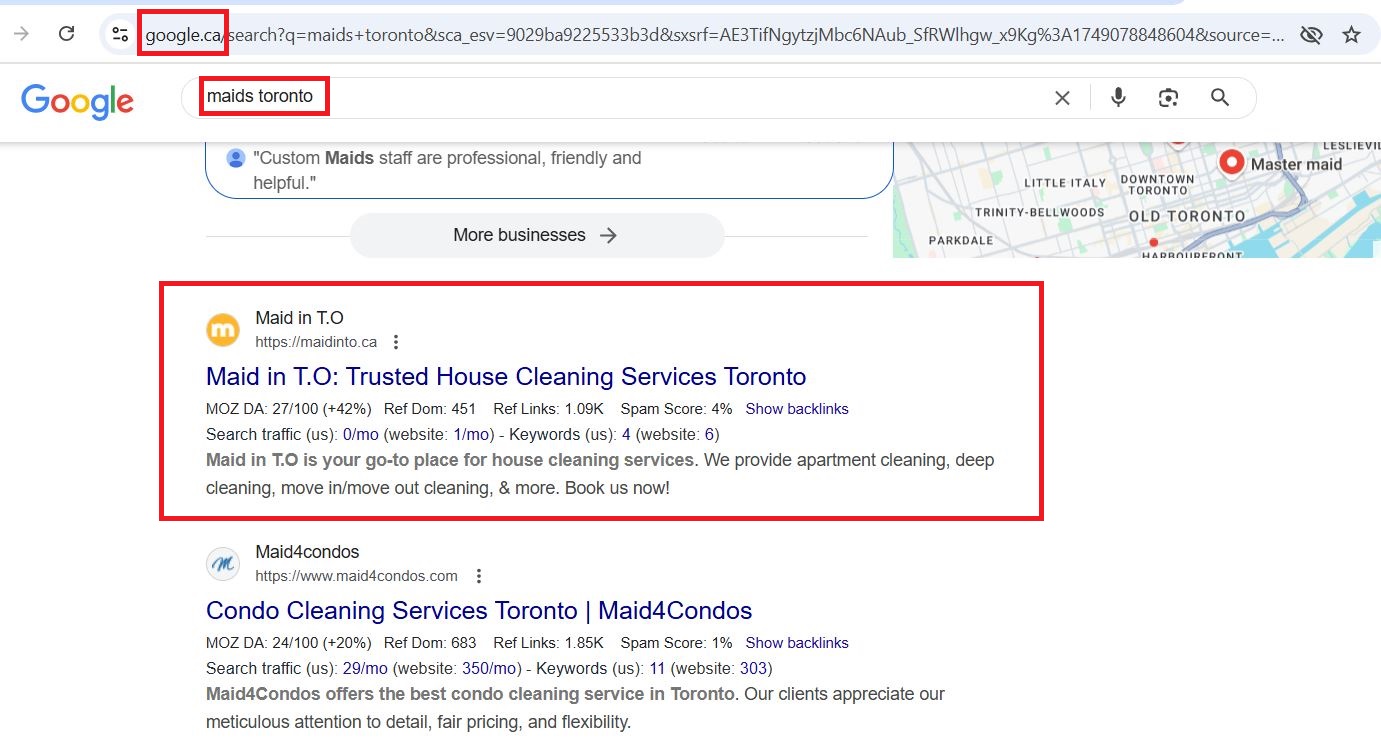
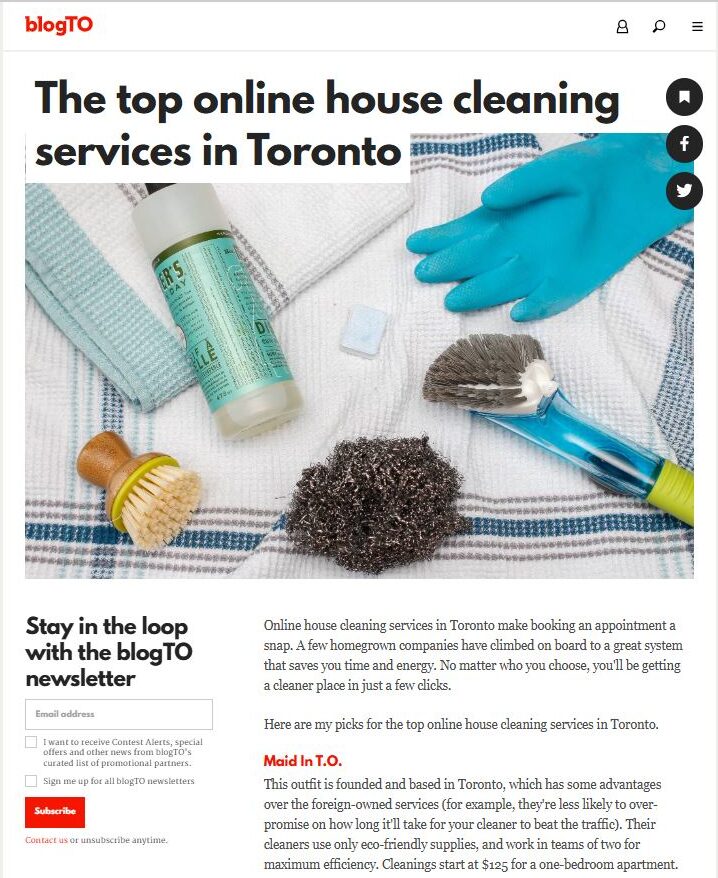
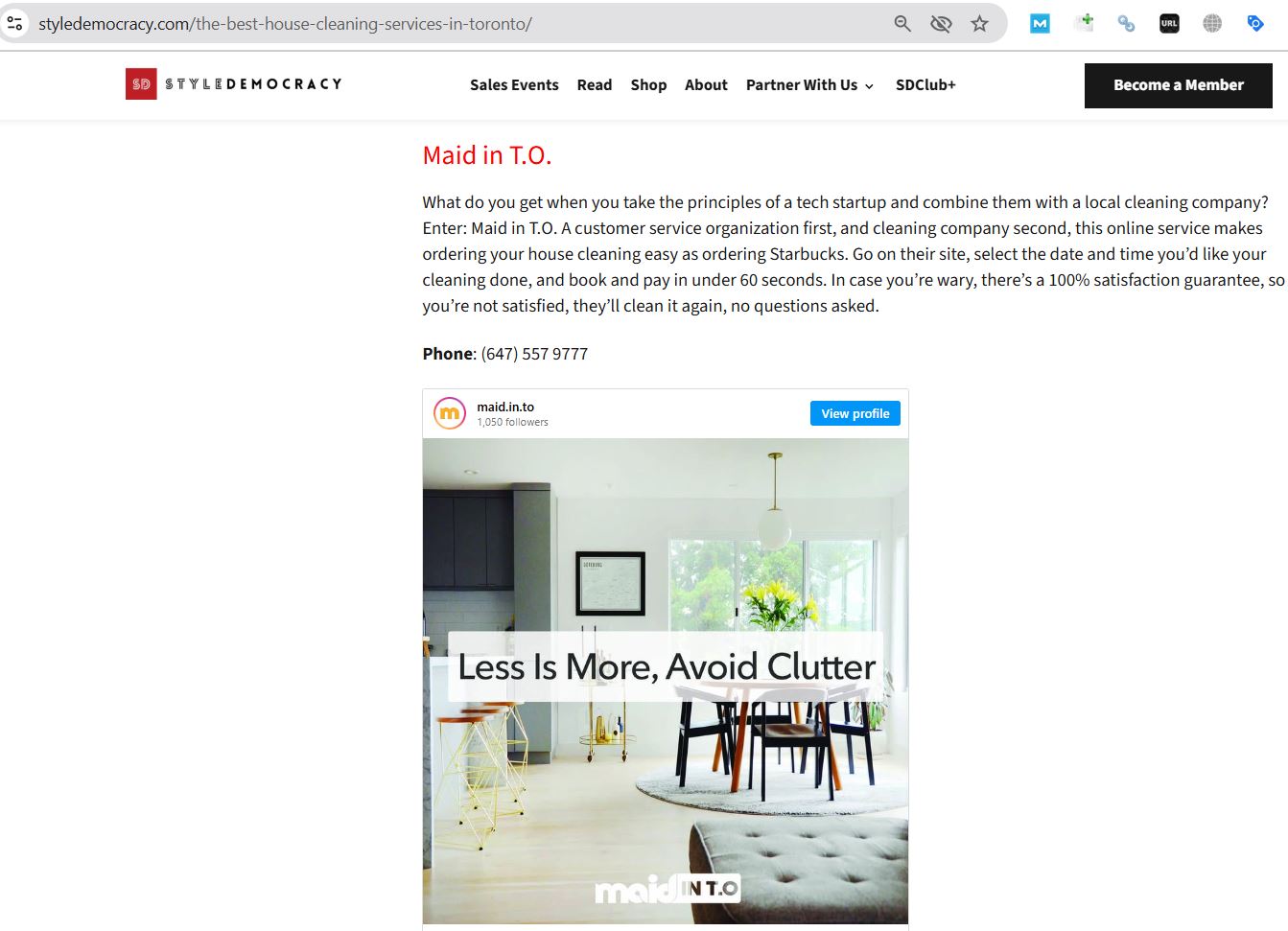
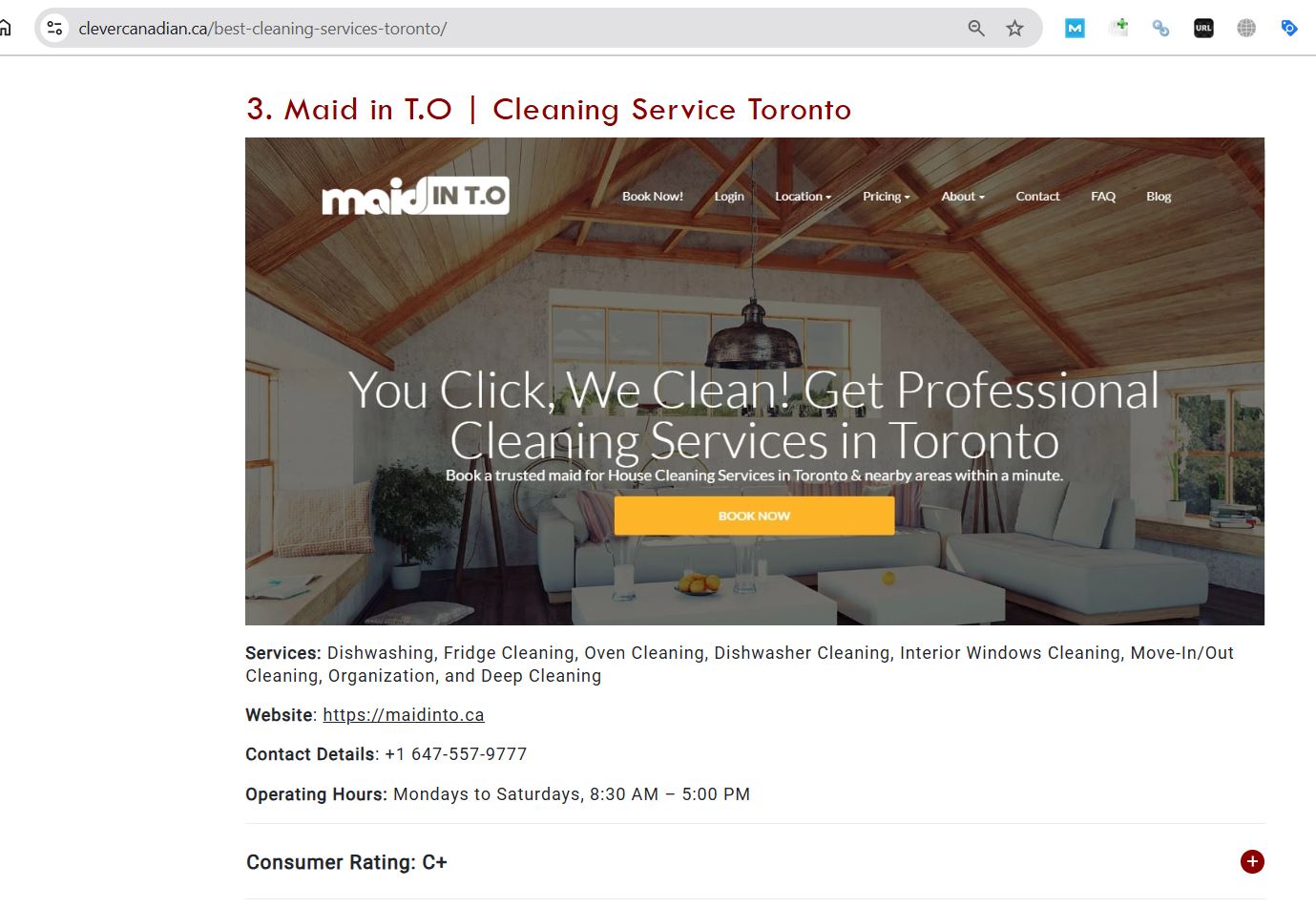
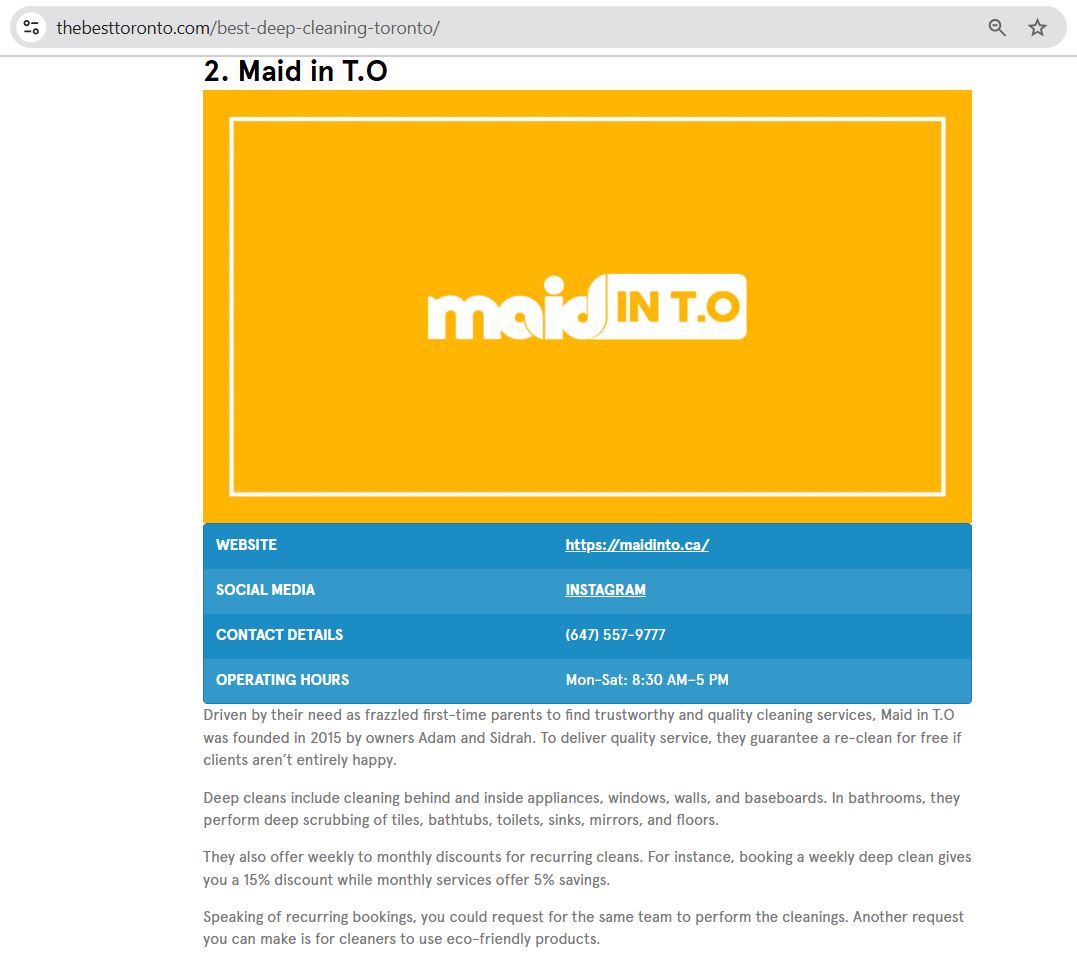
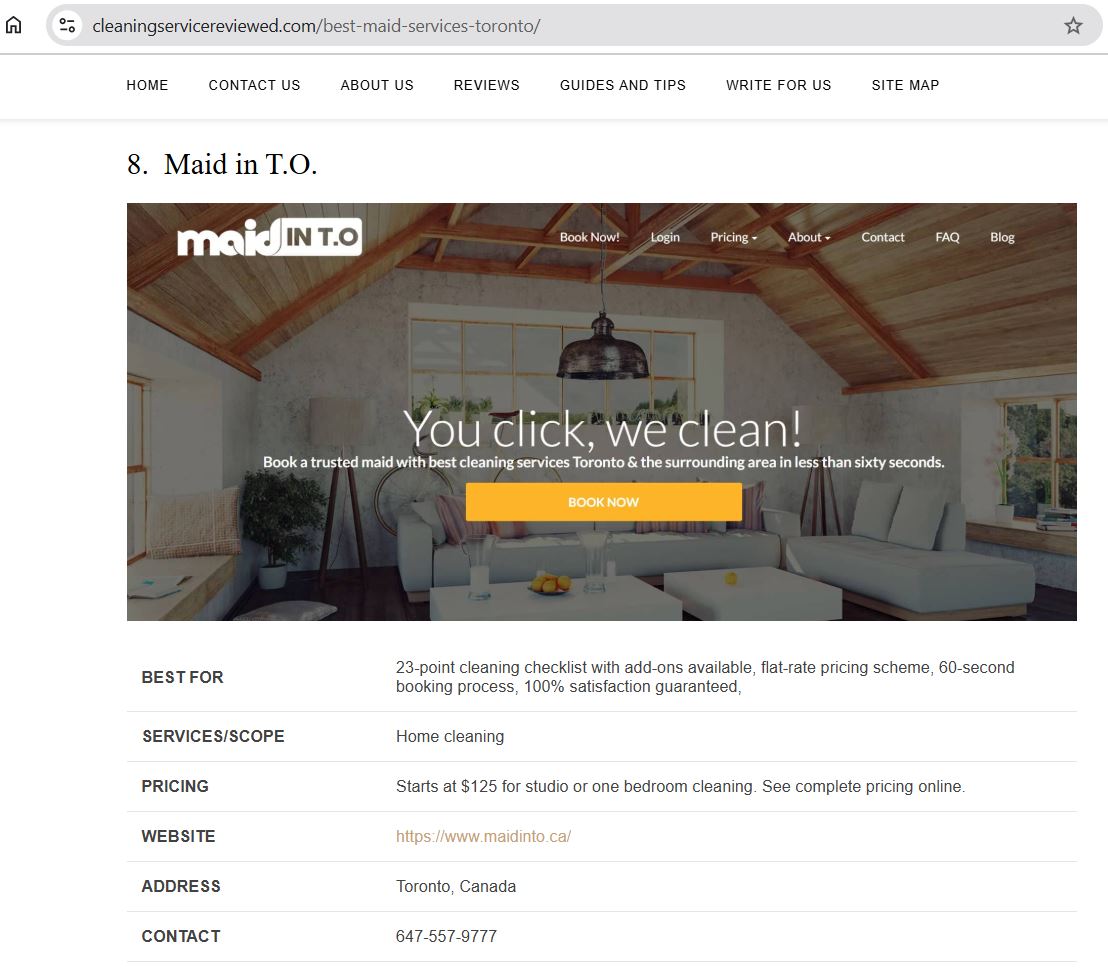
For Maid in T.O., a house cleaning company in Toronto, the target keyword “maids toronto” moved from page 4 to page 1 of Google.ca, and service inquiries from organic search rose 70%. The off-page side came from local relevance: the business is featured in five Toronto “best cleaning service” articles, alongside service pages and location content on its website.
The Result on Google
By June 2025, Maid in T.O. appeared as the top organic result for “maids toronto” on Google.ca, directly below the map pack.
Where Maid in T.O. Is Featured
| Site | Article | Position |
|---|---|---|
| blogTO | The top online house cleaning services in Toronto | #1 of 5 |
| StyleDemocracy | 8 Of The Best House Cleaning Services In Toronto | Listed |
| The Best Toronto | 5 Best Deep Cleaning Services in Toronto | #1 of 5 |
| Cleaning Service Reviewed | The 17 Best Options for Maid Services in Toronto | Listed |
| Clever Canadian | The 15 Best Cleaning Services in Toronto | #4 of 15 |
Results
- “maids toronto” moved from page 4 to page 1 on Google.ca
- Organic impressions up around 280% in three months (client reported)
- Service inquiries from organic search up 70%
- Moz Domain Authority up 8 points, to 27
Why It Worked
Every feature was about Toronto and about cleaning services, the exact two things the business wanted to rank for. Relevance did the work, not volume. Five local articles on the right topic did more than dozens of unrelated links would. More projects like this are on my SEO case studies page.
What Is Offline SEO?
Offline SEO is real-world marketing that improves your online visibility. Events, sponsorships, local press, print ads and word of mouth do not affect Google directly. But they create the things Google does see: brand searches, reviews, mentions and links.
| Offline activity | What it creates online |
|---|---|
| Sponsoring a local event or charity | A link or mention on the event’s website |
| Speaking at a meetup or conference | A speaker profile with a link, and brand searches |
| Local newspaper or radio coverage | A news mention, often with a link |
| Great in-person service | Google reviews and word-of-mouth brand searches |
| Your website or brand name on print, vans and receipts | People searching for your business by name |
Offline SEO matters most for local businesses, because their customers are nearby. For a clinic, a cleaning company or a law firm, being known in the community and being visible in Google Maps usually go together. My guide on how to rank higher on Google Maps covers the online side.
What to Avoid in Off-Page SEO
The off-page tactics that get sites in trouble are the ones that fake trust instead of earning it. Google’s link spam policy covers most of them.
- Buying links that pass ranking value. If a link is paid, Google expects it to be marked
rel="sponsored". See Google’s guide to qualifying outbound links. - Private blog networks (PBNs) and link farms. Networks of sites built only to pass links.
- Automated link building. In my automated SEO vs manual SEO case study, automated links came from unrelated sites, and the site’s authority score fell.
- Exact-match anchor text at scale. The same keyword as the anchor on many links looks unnatural.
How to Measure Off-Page SEO
Track four numbers each month: referring domains, branded searches, rankings for target keywords, and Business Profile actions for local businesses. If these rise together, your off-page work is building real trust.
- Referring domains: the number of separate sites linking to you, in Semrush or Ahrefs
- Branded searches: queries containing your brand name, in Google Search Console
- Rankings: positions for your main keywords
- Business Profile actions: calls, direction requests and website clicks
Frequently Asked Questions
How many backlinks do I need?
There is no fixed number. Look at how many relevant sites link to the pages ranking above you, and aim to earn links of the same quality. Relevance matters more than count.
How long does off-page SEO take to work?
Usually a few months. Google has to find each new link or mention, and trust builds over time. In the Maid in T.O. example, rankings moved within about two months of the work.
Are guest posts still worth it in 2026?
Yes, on real sites with an audience that matches yours. Guest posts written only to get a link, on sites that publish anything, are a waste of time and can count as link spam.
Does Domain Authority affect Google rankings?
No. Domain Authority is a Moz score, not a Google metric. It roughly reflects link strength, which is why it often rises alongside rankings, but Google does not use it.
Is social media part of off-page SEO?
Indirectly. Social shares are not a ranking factor, but they help people find your content, and some of those people may link to it or search for your brand.
Final Thoughts
Good off-page SEO looks like a business people actually talk about. Start with accurate listings and reviews, earn relevant local and industry mentions, and keep your links natural. Five relevant features moved a Toronto cleaning company to page one. Hundreds of random links would not have.
If you want help building trust for your own business, contact me and tell me about your website.

SEO consultant with 11+ years of experience helping e-commerce, legal, medical, and local service businesses in 30+ countries, mostly the US, UK, Canada, and Australia, get found on Google, Bing, and AI search engines like ChatGPT, Perplexity, and Claude. Every case study on this site uses real data from the project’s Google Search Console, Analytics, or Semrush. Learn more about me, read my SEO case studies, or work with me.

