

Last updated: November 2026
The Short Answer
Local SEO for service area businesses works differently because the business travels to its customers, so it has no storefront to rank from. These two case studies show how a chimney company in Hartford, Connecticut, and a moving company in Fort McMurray, Alberta, both reached the Google 3-Pack for their main searches in about three months, using a set-up built for service area businesses.
I’m Frasat Ali, an SEO consultant. I have worked in SEO since 2015 and have ranked dozens of service area businesses, such as chimney sweeps, movers, cleaners and contractors, in Google’s local results. This page shows two of those projects step by step, with the ranking screenshots.
What Makes a Service Area Business Different?
A service area business (SAB) serves customers at their home or office instead of at its own address. That changes how its Google Business Profile is set up and where it can rank.
| Storefront business | Service area business | |
|---|---|---|
| Examples | Clinics, shops, restaurants | Chimney sweeps, movers, cleaners, plumbers, roofers |
| Address on Google | Shown | Hidden, with service areas listed instead |
| Where customers meet the business | At the business | At the customer’s location |
| Main ranking challenge | Beating nearby competitors | Showing up across the towns it serves, not just near its base |
Google’s business guidelines say a business that serves customers at their locations, and does not serve them at its own address, should hide that address and list its service areas instead. Getting this right is the first step of service area business SEO.
Case Study 1: Chimney and Roofing Services in Hartford, CT
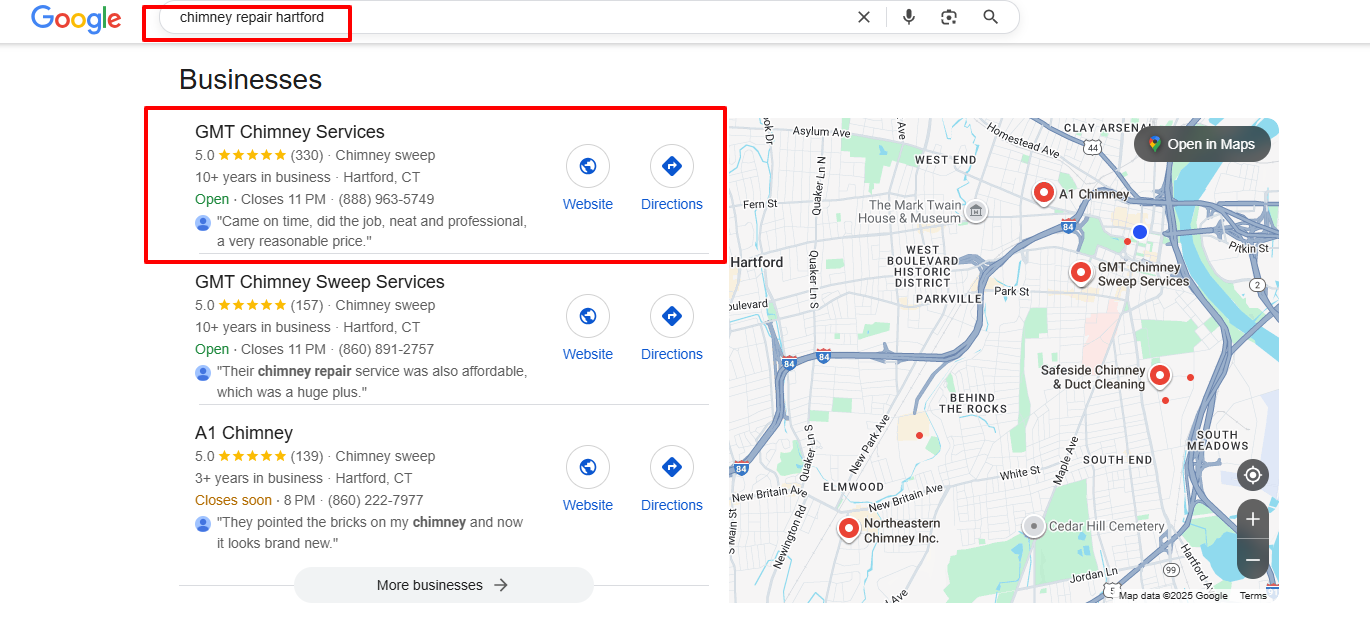
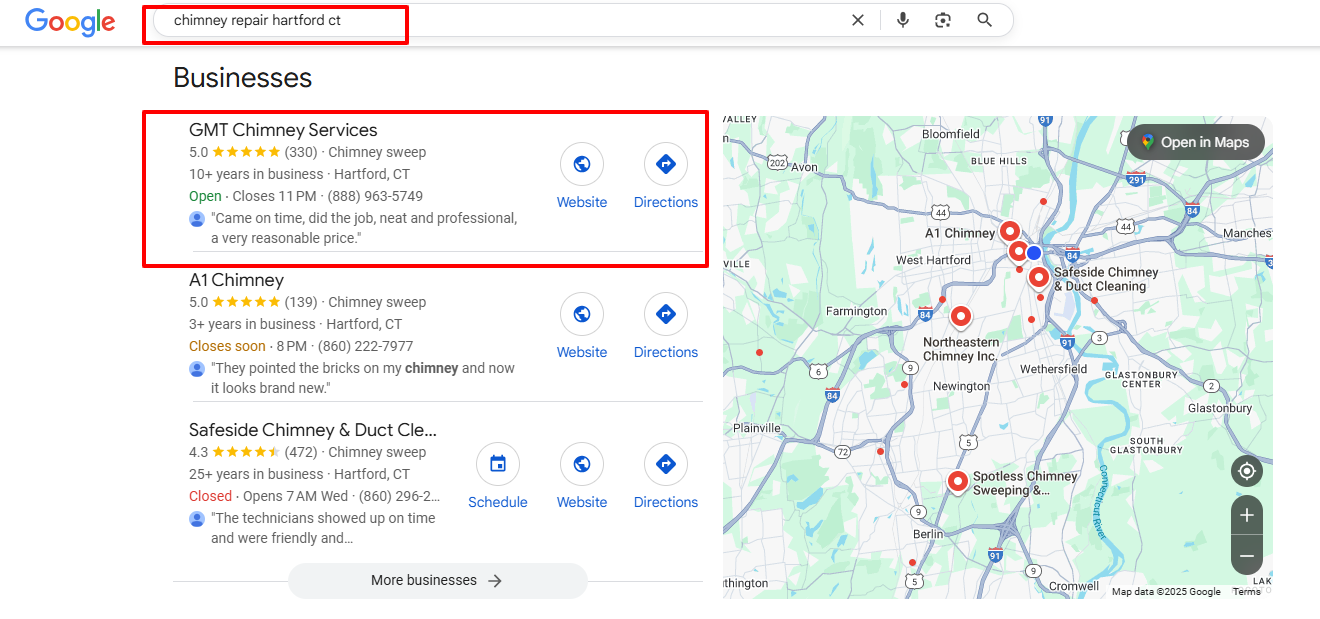
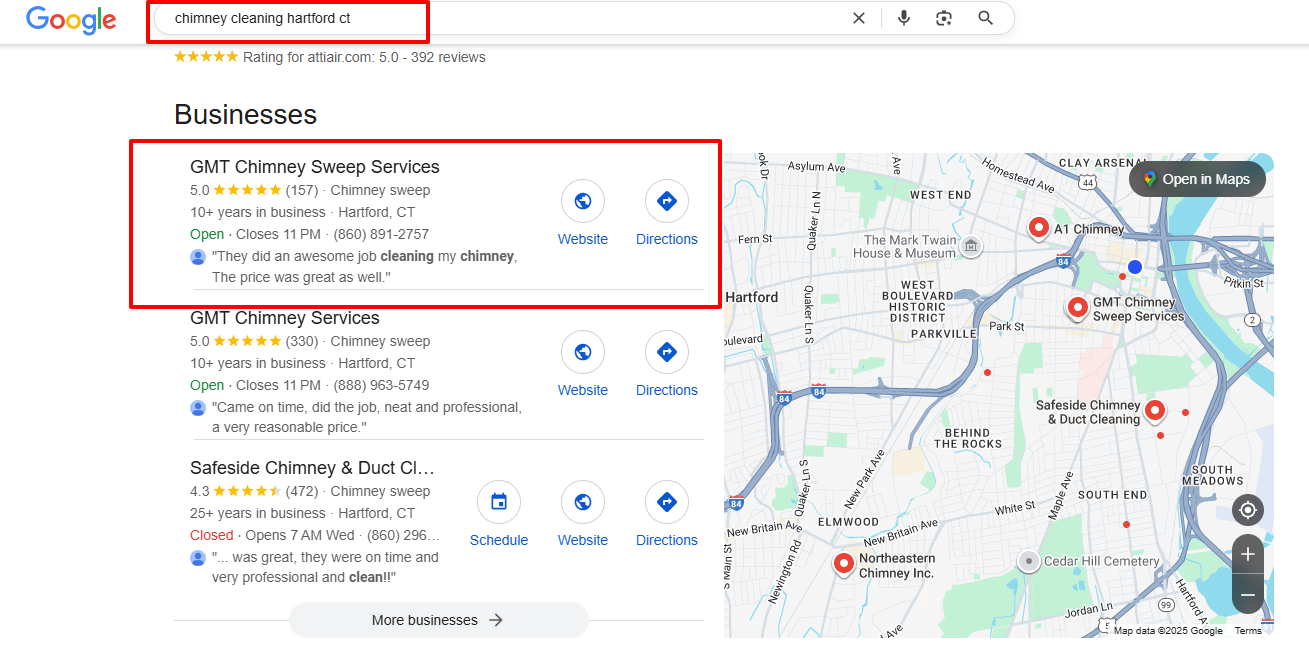
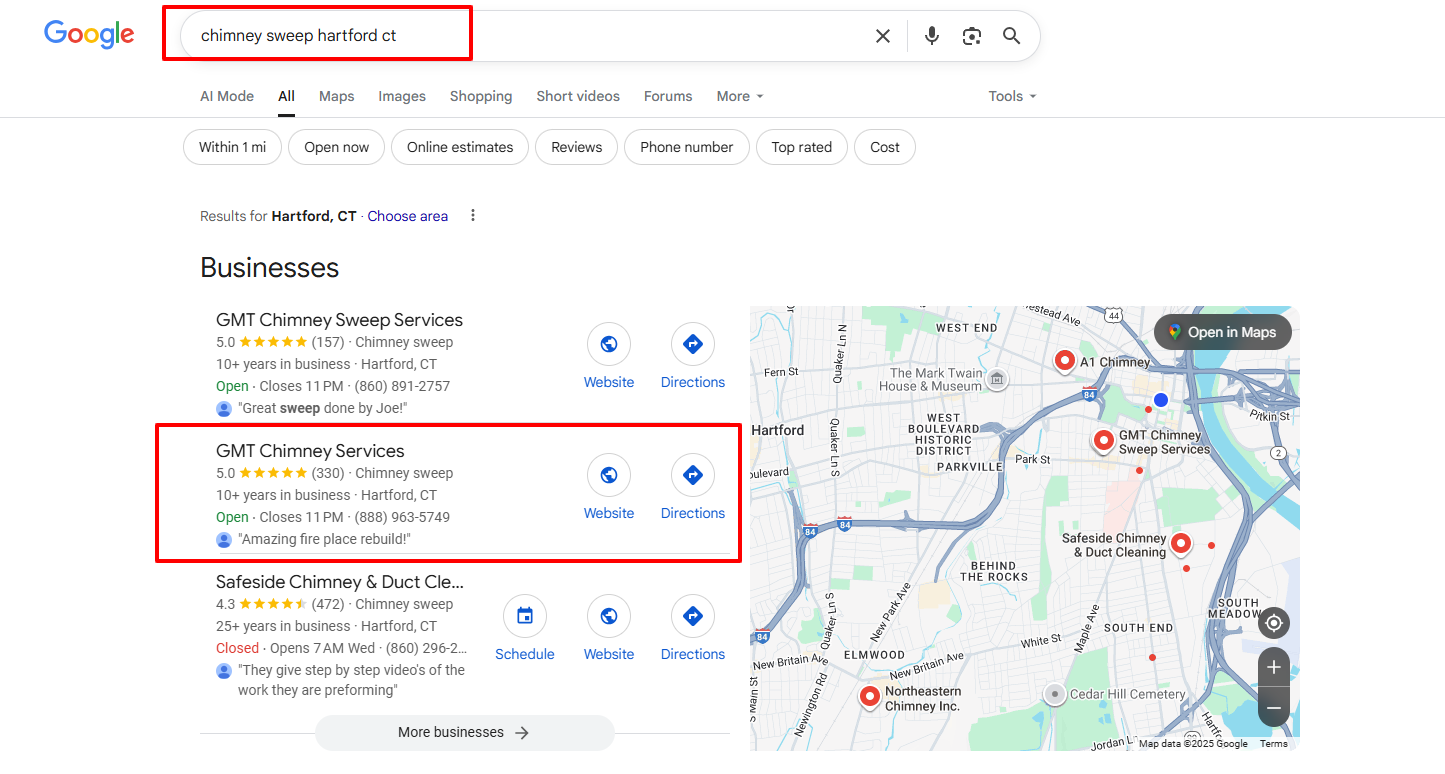
A chimney and roofing company in Hartford reached the Google 3-Pack for chimney repair, chimney cleaning and chimney sweep searches within three months. This is Google Maps SEO for a chimney sweep business: a crowded local trade where most calls come from the map pack.
The Target Searches
- chimney repair hartford
- chimney repair hartford ct
- chimney cleaning hartford ct
- chimney sweep hartford ct
What I Did
- Business Profile set-up for a service area business. Chose the most accurate categories (chimney services and roofing contractor), hid the address, added the service areas, and uploaded real photos of the team’s work.
- Location pages. Built a page for Hartford and each nearby town, each one covering the services, the local problems customers face and links to related pages.
- Reviews. Coached the owner to ask every happy customer for a review straight after the job. Customers often mentioned the service and their town in their own words.
- Citations and links. Listed the business in major US directories and earned a few links from home improvement blogs.
The Results
Within three months, the business ranked in the Google 3-Pack for all four target searches. These screenshots were taken in August 2025:
The website improved too. After the service pages, FAQs and educational posts were published, a one-month Search Console comparison showed website clicks up 49% and impressions up 48%.

Case Study 2: Moving and Cleaning Company in Fort McMurray, Alberta
A moving and cleaning company in Fort McMurray reached the Google 3-Pack for its main mover searches. Local SEO for moving companies has one extra challenge: moves happen at two addresses, so the profile and website must make the service area very clear.
The Target Searches
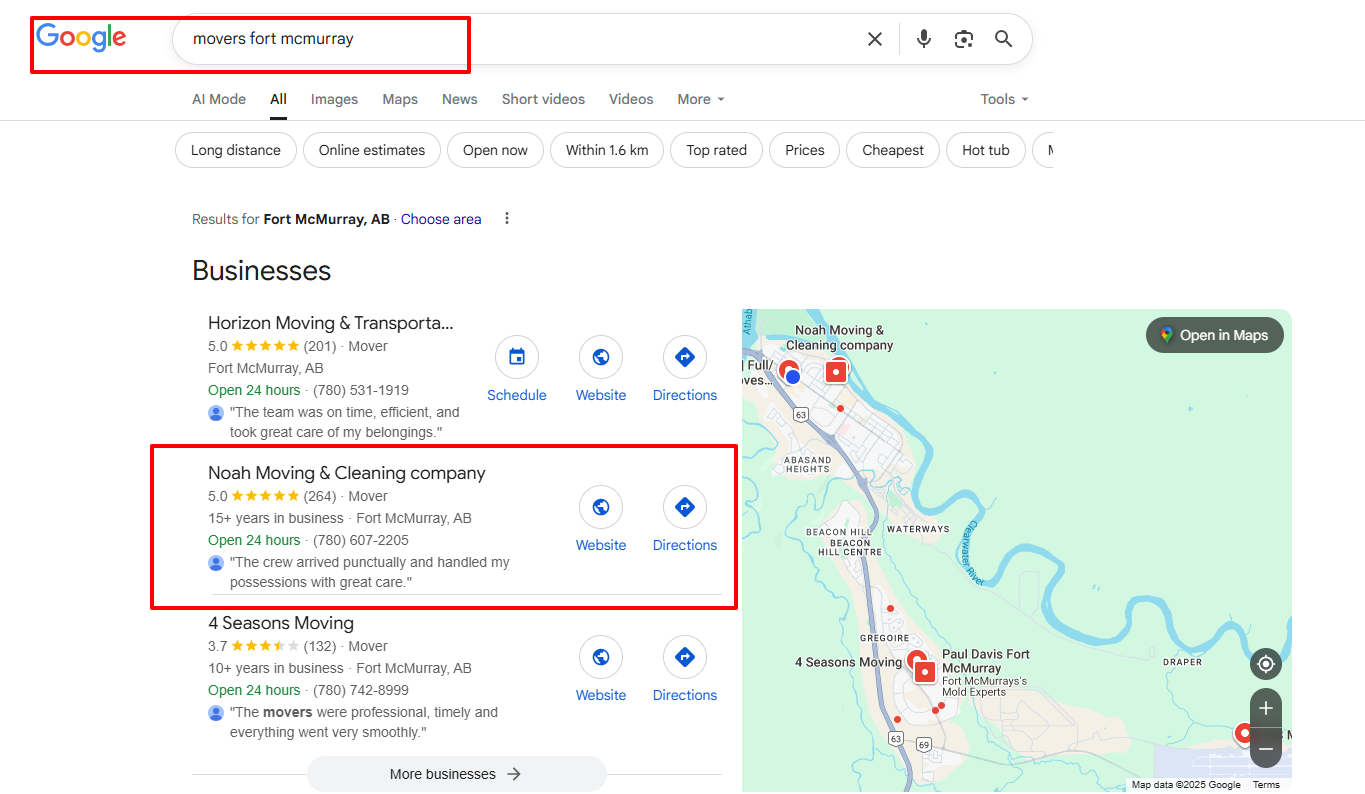
- movers fort mcmurray
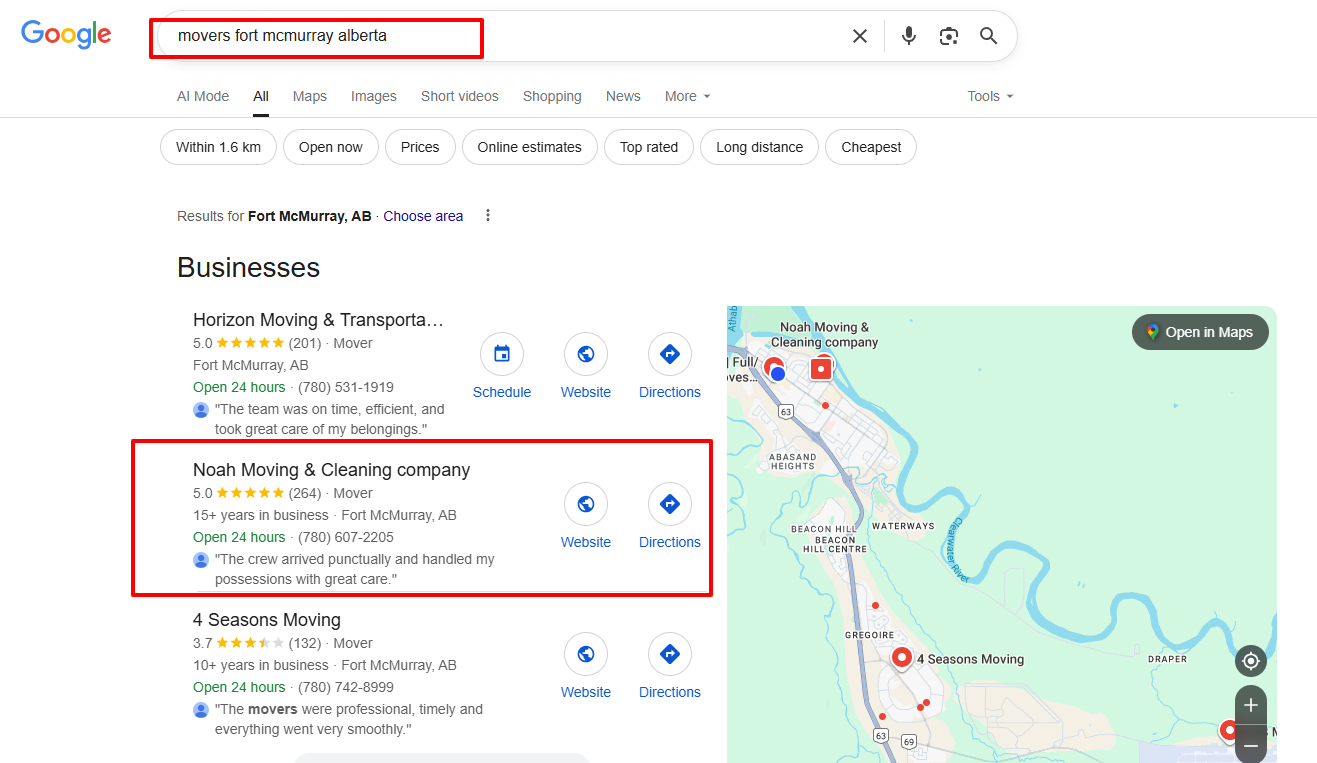
- movers fort mcmurray alberta
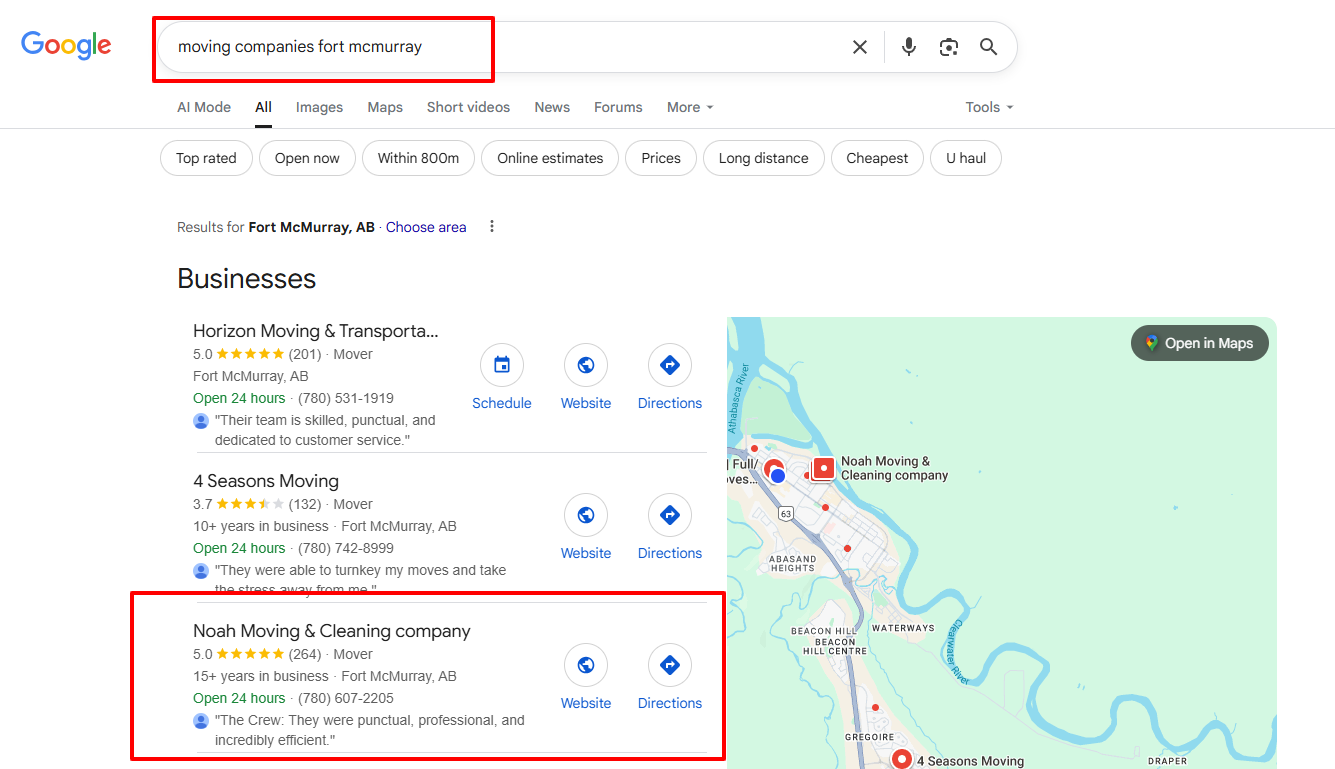
- moving companies fort mcmurray
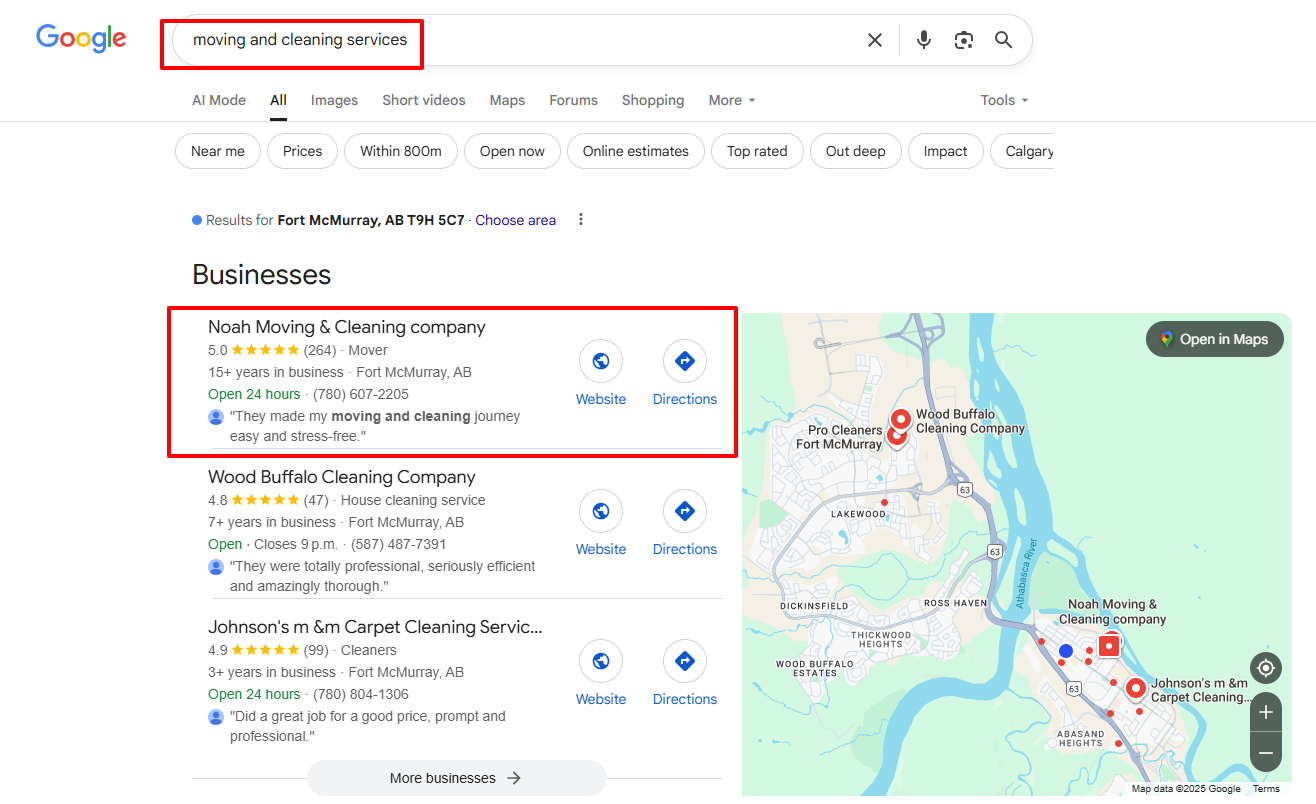
- moving and cleaning services
What I Did
- Business Profile set-up. Chose the moving company and cleaning service categories, hid the address and set the service areas.
- Service pages built around customer worries. Pages for Fort McMurray movers and moving companies answered the three questions movers hear most: price, the safety of belongings, and reliability on moving day.
- Photos and updates. Uploaded branded photos of the trucks, staff and real moves, and posted weekly Business Profile updates.
- Steady reviews. The company had a high volume of jobs, so we built asking for a review into every completed move.
- Local citations and mentions. Listed the business in Alberta business directories and earned a few local press mentions.
The Results
Within about three months, the company reached the Google 3-Pack for its main mover searches in Fort McMurray. Screenshots from August 2025:
The Two Projects Side by Side
| Hartford chimney company | Fort McMurray moving company | |
|---|---|---|
| Country | USA | Canada |
| Trade | Chimney and roofing | Moving and cleaning |
| Biggest lever | Location pages for nearby towns | Steady reviews from high job volume |
| Extra work | Links from home improvement blogs | Weekly profile updates and local press |
| Result | 3-Pack for 4 target searches in about 3 months | 3-Pack for main mover searches in about 3 months |
The trades were different, but the foundation was the same: an accurate service area set-up, real local pages, and genuine reviews.
My Service Area Business SEO Playbook
These are the steps I repeat for every service area business, in this order. For general Google Maps steps that apply to any local business, see my guide on how to rank higher on Google Maps.
- Hide the address and set service areas. List the towns you actually serve, not every town in the region.
- Pick the most specific categories for your trade.
- Build one real page per main service and per main town. Each page needs local details, not just a different town name.
- Make reviews part of every job. Ask at the moment the customer is happiest, usually right after the work is done.
- Keep your name and phone number identical across directories and your website.
- Earn a few relevant links from trade blogs, local news or local “best of” lists.
What These Case Studies Do Not Show
- Rankings change. The screenshots show the 3-Pack in August 2025. Local rankings also vary depending on where the searcher is.
- Distance still matters. A service area business ranks best near its verified base, even with service areas set. It will not rank equally well across a whole region.
- Leads are not shown here. These projects are measured by rankings and website data, not revenue.
Frequently Asked Questions
Does hiding my address hurt my Google Maps ranking?
No. Hiding the address is what Google’s guidelines ask service area businesses to do. Google still uses your verified location behind the scenes, so you will usually rank best near it.
How many service areas should I add?
Only the towns or areas you genuinely serve and can reach quickly. Google’s guidelines also say your service area should not extend beyond about two hours of driving time from your base. Listing a whole province or state does not make you rank everywhere, and it can make your profile less clear.
Can a service area business rank in several towns?
Yes, especially in towns close to its base. A strong page for each town, plus reviews from customers there, helps the business appear in more of them.
How long does local SEO take for a service area business?
In these two projects, about three months to reach the 3-Pack for the main searches. It depends on competition, how many reviews competitors have, and the state of the profile at the start.
Final Thoughts
Service area businesses can win the map pack without a storefront. Set up the profile the way Google asks, build real pages for the towns you serve, and make reviews part of every job. That foundation took a chimney company and a moving company into the 3-Pack in two different countries.
For more projects, see my SEO case studies. If you run a service business and want more calls from Google, contact me.

SEO consultant with 11+ years of experience helping e-commerce, legal, medical, and local service businesses in 30+ countries, mostly the US, UK, Canada, and Australia, get found on Google, Bing, and AI search engines like ChatGPT, Perplexity, and Claude. Every case study on this site uses real data from the project’s Google Search Console, Analytics, or Semrush. Learn more about me, read my SEO case studies, or work with me.

