
Last updated: November 2026
The Short Answer
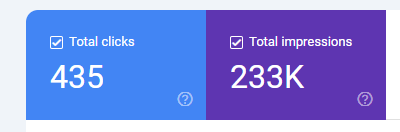
This ecommerce SEO case study shows how a brand new online wig store grew from zero to 233K+ Google impressions and 435 clicks with semantic SEO, a cluster-based internal linking structure and very few backlinks. The turning point was internal linking. Google ignored the store’s new pages until I changed how they linked to each other.
Project Snapshot
| Item | Detail |
|---|---|
| Store | New online store selling human hair wigs and hair extensions |
| Market | United States |
| Starting point | Brand new domain, no traffic, no rankings |
| Content started | Late September 2024 |
| Pages built | 1,000+ (200 blog posts and 800 tag pages) |
| Internal links | 15 to 30 per page |
| Backlinks | Very few. No outreach, no paid PR |
| Keyword tool | Semrush Keyword Strategy Builder |
| Result | 233K+ impressions and 435 clicks in Google Search Console |
Why the Store Switched From Google Ads to SEO
Google Ads brought clicks fast, but the cost per click was too high for the profit on each sale. Paid traffic also stops the day the budget stops. The store needed a source of traffic that would keep growing, so I moved the effort into SEO.
What Semantic SEO Meant for This Store
Semantic SEO means covering a whole topic, not just one keyword. Google tries to understand what a page means and how it connects to related ideas. A store that answers every question around a product looks more useful than one with a single product page.
For example, I did not write one page about “glueless wigs” and stop. I also covered who needs them, how to wear them, how to care for them, and how they compare with other wig types. Then I linked those pages to each other so Google could see the full topic.
Step 1: Keyword Research From Six Seed Keywords
The research started with six seed keywords that buyers already search for. A seed keyword is a short, broad term that a keyword tool expands into hundreds of longer, more specific searches.
- human hair wigs
- glueless wigs
- lace front wigs
- blonde wig
- virgin hair
- remy hair
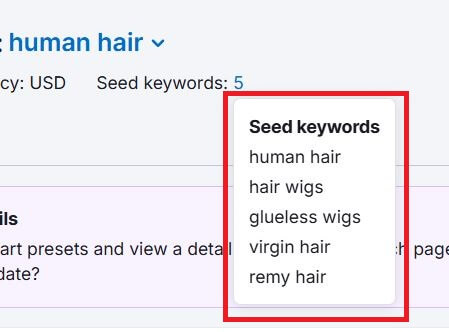
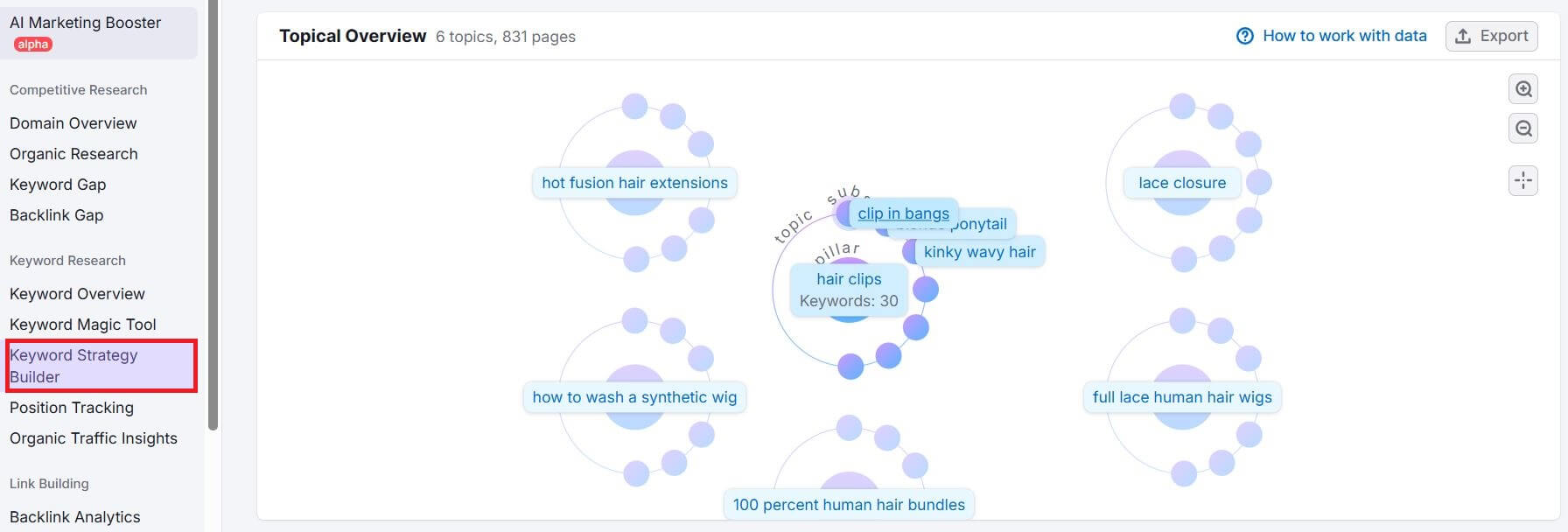
I entered these into the Semrush Keyword Strategy Builder. It grouped related searches into clusters and surfaced long-tail phrases such as:
- blonde wigs with dark roots
- short lace front wigs for summer
- how to style a virgin hair wig
- best glueless wigs for alopecia
I removed competitor brand names from the list. People searching for another brand rarely buy from a different store.
Step 2: Giving Every Keyword One Page
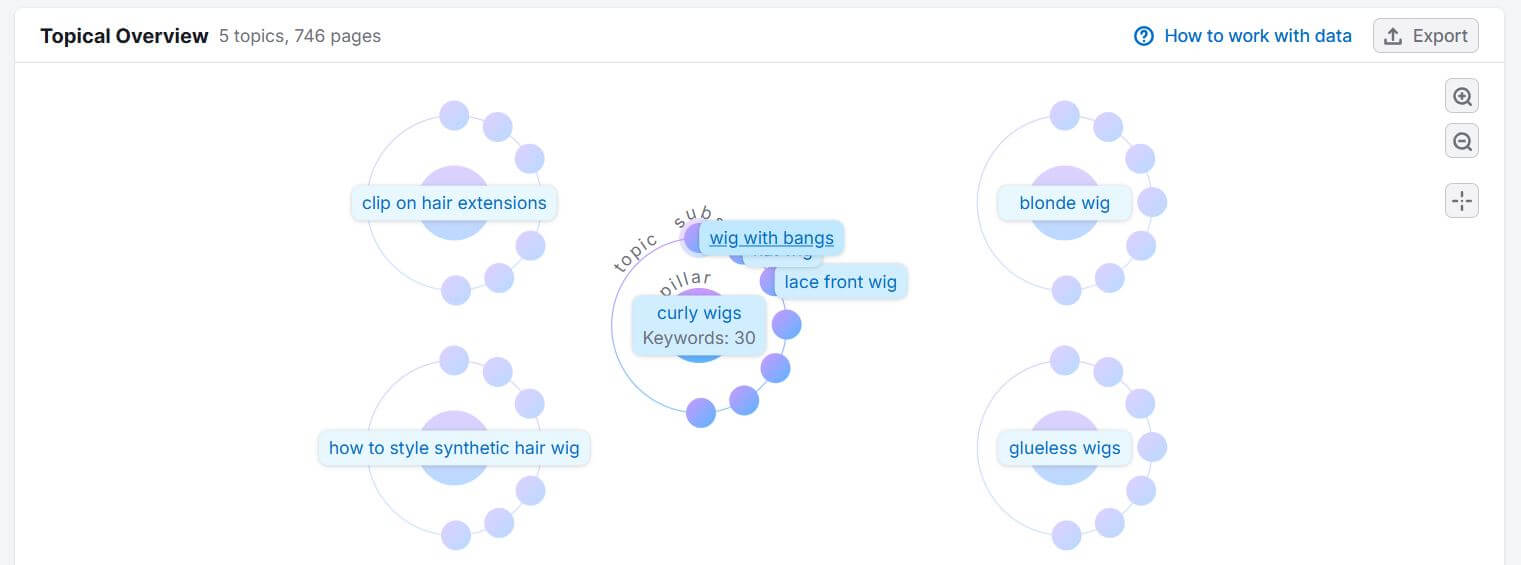
Every keyword got exactly one page, so no two pages on the store competed for the same search. When two pages target the same keyword, Google has to guess which one to rank, and often ranks neither well. This is called keyword cannibalization.
| Page type | Job | Example |
|---|---|---|
| Pillar page | Covers the main topic | Human hair wigs |
| Subpage | Covers one product group | Glueless wigs, lace front wigs |
| Blog post or tag page | Answers one specific question | How to style lace wigs, wig care tips |
Step 3: Building 1,000+ Pages Without Thin Content
I published 200 blog posts and 800 tag pages, and each tag page had 800 to 1,000 words of its own content. Tag pages are often thin lists of products, which Google tends to ignore. These were built as real landing pages instead.
Each tag page included:
- An introduction of 100 to 150 words
- A product overview
- Answers to common customer questions
- Links to related products
- Links to related blog posts

How AI Was Used
I used the free version of ChatGPT for first drafts, then edited every page by hand before it went live. I checked facts, fixed the tone and added the internal links. Google’s guidance on creating helpful content is clear that content must be written for people, so no raw draft was published.
This is different from bulk AI publishing. Every page here was planned around one keyword, edited, and linked into a cluster before it went live. In my manual SEO vs AI content case study, unedited AI pages with no internal links were indexed at only about 10%. My full editing process is in my SEO content writing guide.
Step 4: The Internal Linking Mistake That Blocked Indexing
My first internal linking setup failed, and Google did not index the new pages. I had linked the pages in a straight line. Changing to a cluster structure, where every page links up to its pillar and across to related pages, is what got the store indexed.
| First attempt (failed) | Second attempt (worked) | |
|---|---|---|
| Structure | Page 1 → page 2 → page 3, in a line | Clusters around pillar pages |
| Links per page | 1 to 2 | 15 to 30 |
| Link direction | One way | Blog posts ↔ tag pages, subpages → pillar |
| Anchor text | Generic | Describes the page it points to |
| Result | New pages not indexed | Pages appeared in Google’s index within weeks |
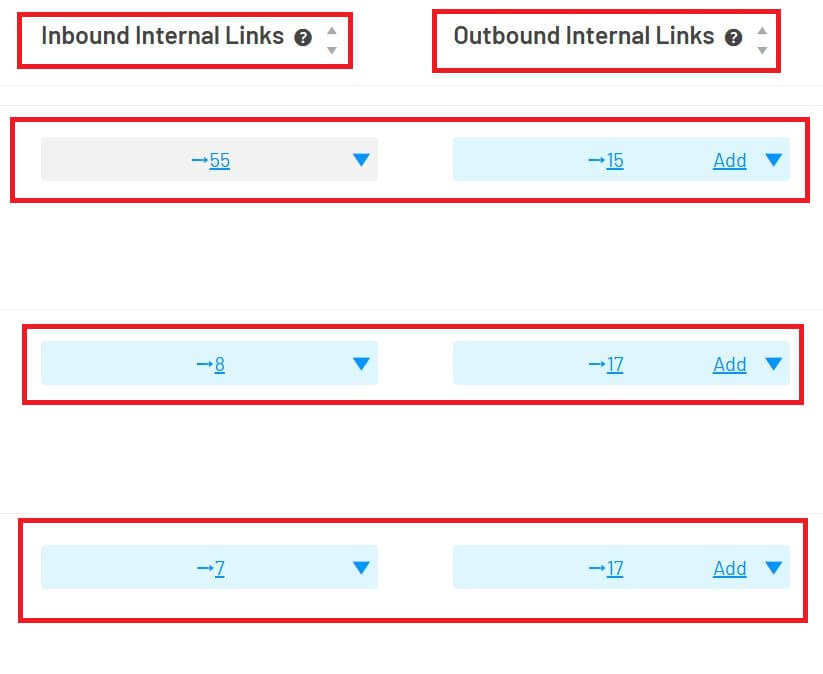
Why it worked: Google finds new pages mainly by following links. In a straight line, a page deep in the chain is many clicks away from anything Google already knows about. In a cluster, every page is one or two links from a strong pillar page. Google’s own link best practices also recommend descriptive anchor text, which is what the second setup used.
Is 15 to 30 Internal Links Right for Every Site?
No. That number fit a store with 1,000+ connected pages. A normal blog post needs far fewer, usually a handful of relevant links. My SEO checklist covers the general rule. The lesson here is not the exact number. It is that every page needs a clear path from the pages Google already crawls.
Step 5: The Same On-Page Template for Every Page
With 1,000+ pages, every page followed one simple template, so quality stayed consistent at scale.
- One H1, with clear H2 and H3 headings
- Short paragraphs and bullet points
- A question and answer section with short, direct answers
- Descriptive image file names and alt text
Two examples of the store’s answers:
How long do real human hair wigs last? With proper care, real human hair wigs can last 1 to 2 years, depending on use and care.
Are human hair extensions better than synthetic ones? Human hair looks natural, can be styled with heat, and lasts longer than synthetic hair.
The Results: Three Search Console Checkpoints
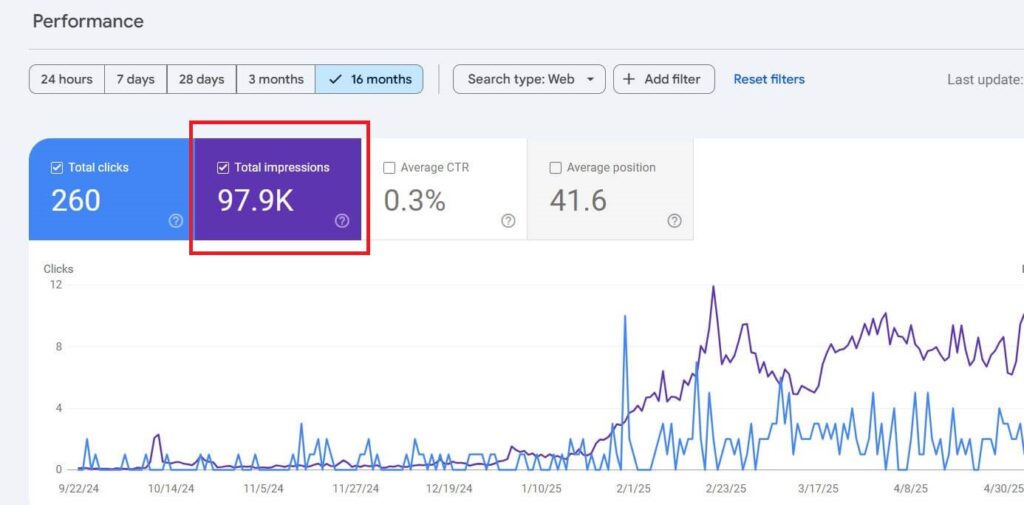
All numbers are running totals in Google Search Console from late September 2024. Impressions stayed low for the first few months, then rose sharply once the new internal linking structure took effect.
| Checkpoint | Impressions | Clicks |
|---|---|---|
| 1 | 97.9K | 260 |
| 2 | 106K | 274 |
| 3 | 233K+ | 435 |

I built very few backlinks during this time. There was no outreach campaign, no paid PR and almost no guest posting.
What These Numbers Do and Do Not Show
This project proved that a brand new store can get 1,000+ pages indexed and earn six-figure impressions with structure alone. It did not prove that structure alone wins sales. Here is an honest reading of the data.
- Visibility: strong. Going from zero to 233K+ impressions shows Google indexed and tested the pages for a wide range of searches.
- Clicks: early stage. 435 clicks from 233K impressions is a low click-through rate. At the earlier checkpoints, the average position was around 41, which is page 5 of Google. Most pages were visible but not yet on page one.
- Sales: not measured here. Impressions show visibility, not revenue.
What I Would Do Next on a Store Like This
The next phase is about moving pages from page 5 to page 1. Indexing was the first problem. Rankings are the second.
- Find the pages closest to page one. In Search Console, filter for queries at positions 11 to 20 and improve those pages first.
- Strengthen the best pillar pages. Add depth, real product photos and customer questions.
- Build a small number of relevant links. Beauty and hair care sites, not generic directories. Competitive product keywords usually need some authority.
- Merge weak tag pages. Any tag page that gets no impressions after six months should be merged into a stronger page.
What I Learned From This Ecommerce SEO Project
- Fix indexing before anything else. A page Google has not indexed cannot rank.
- Structure is an indexing tool. The same 1,000 pages went from ignored to indexed just by changing how they linked.
- One keyword, one page. Clear mapping stopped the store’s pages from competing with each other.
- AI drafts need human editing. AI saved time. The editing and linking made the pages worth indexing.
- Read past impressions. Always check clicks and average position too.
Frequently Asked Questions
What is semantic SEO for ecommerce?
It means building groups of pages around a product topic. One main page covers the product, supporting pages answer related questions, and internal links connect them so Google understands the full topic.
Why were the store’s pages not getting indexed?
They were linked in a straight line, so most pages were many clicks away from any page Google already crawled. Rebuilding the links into clusters around pillar pages fixed it within weeks.
Can tag pages rank in ecommerce SEO?
Yes, if they are real landing pages. Here, each tag page had 800 to 1,000 words of its own content, customer questions and links to related products. Thin tag pages with only a product grid usually do not rank.
Can a new online store rank without backlinks?
A new store can get indexed and earn impressions with strong structure and content, as this case shows. Reaching page one for competitive product keywords usually still needs some relevant backlinks.
Final Thoughts
This store started with paid ads and no organic traffic. Keyword clusters, one page per keyword and a cluster-based internal linking structure took it to 233K+ impressions with very few backlinks.
If your store’s pages are not getting indexed, look at your internal links before you write more content. That one change did more for this project than anything else. You can see how this approach compares with my local and medical projects on my SEO case studies page, or contact me about your store.

SEO consultant with 11+ years of experience helping e-commerce, legal, medical, and local service businesses in 30+ countries, mostly the US, UK, Canada, and Australia, get found on Google, Bing, and AI search engines like ChatGPT, Perplexity, and Claude. Every case study on this site uses real data from the project’s Google Search Console, Analytics, or Semrush. Learn more about me, read my SEO case studies, or work with me.

